
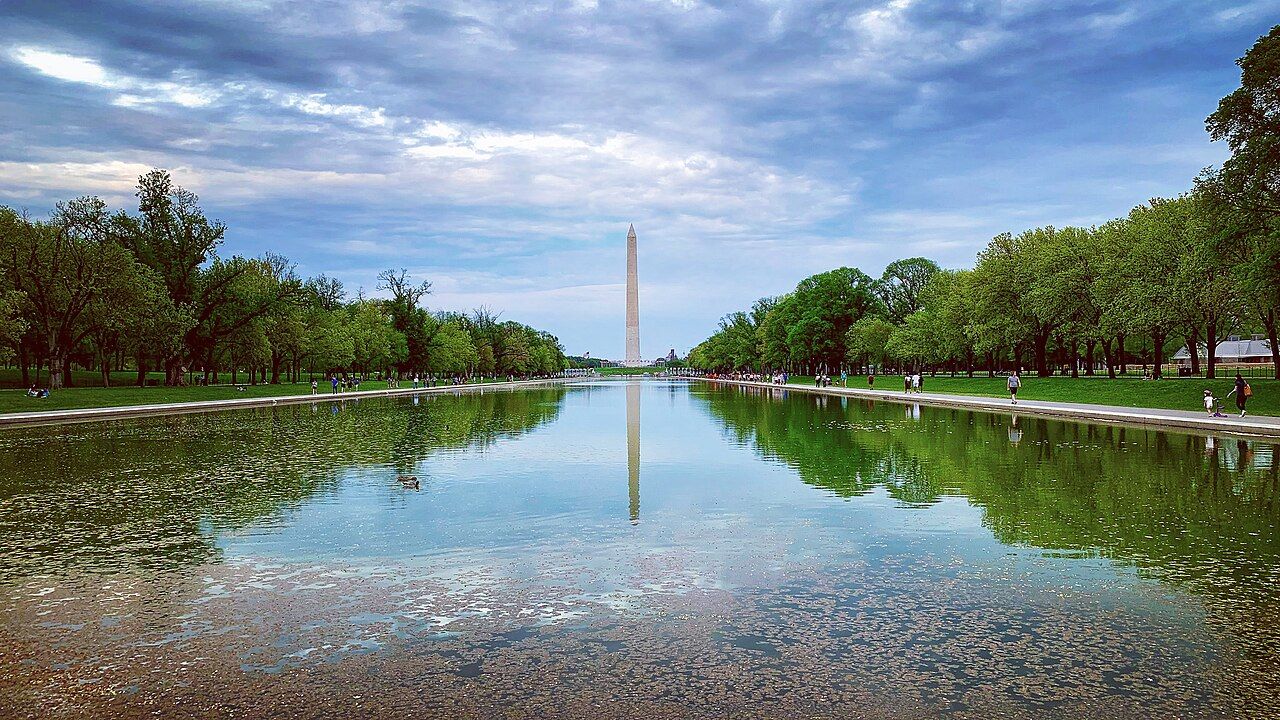
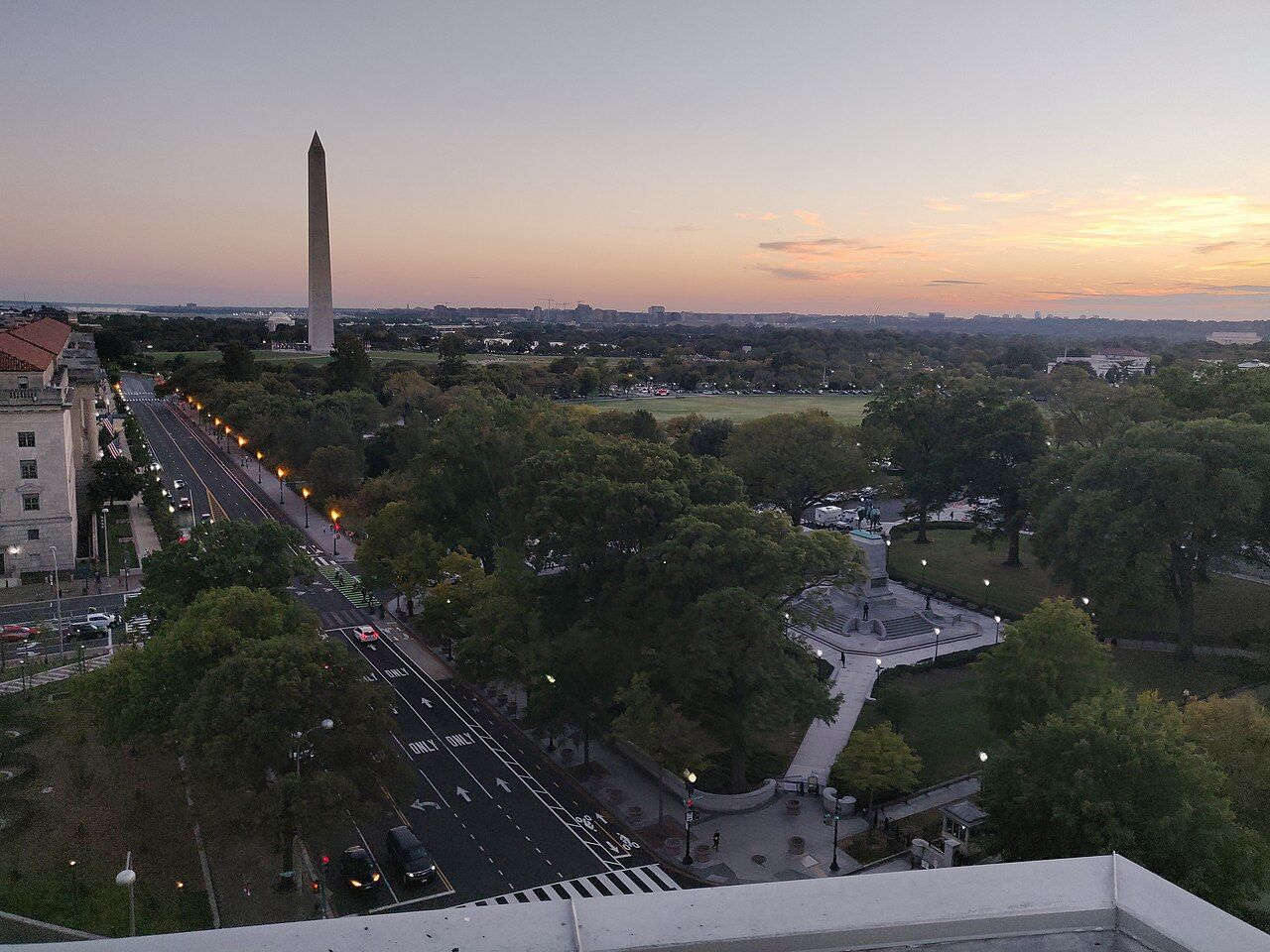
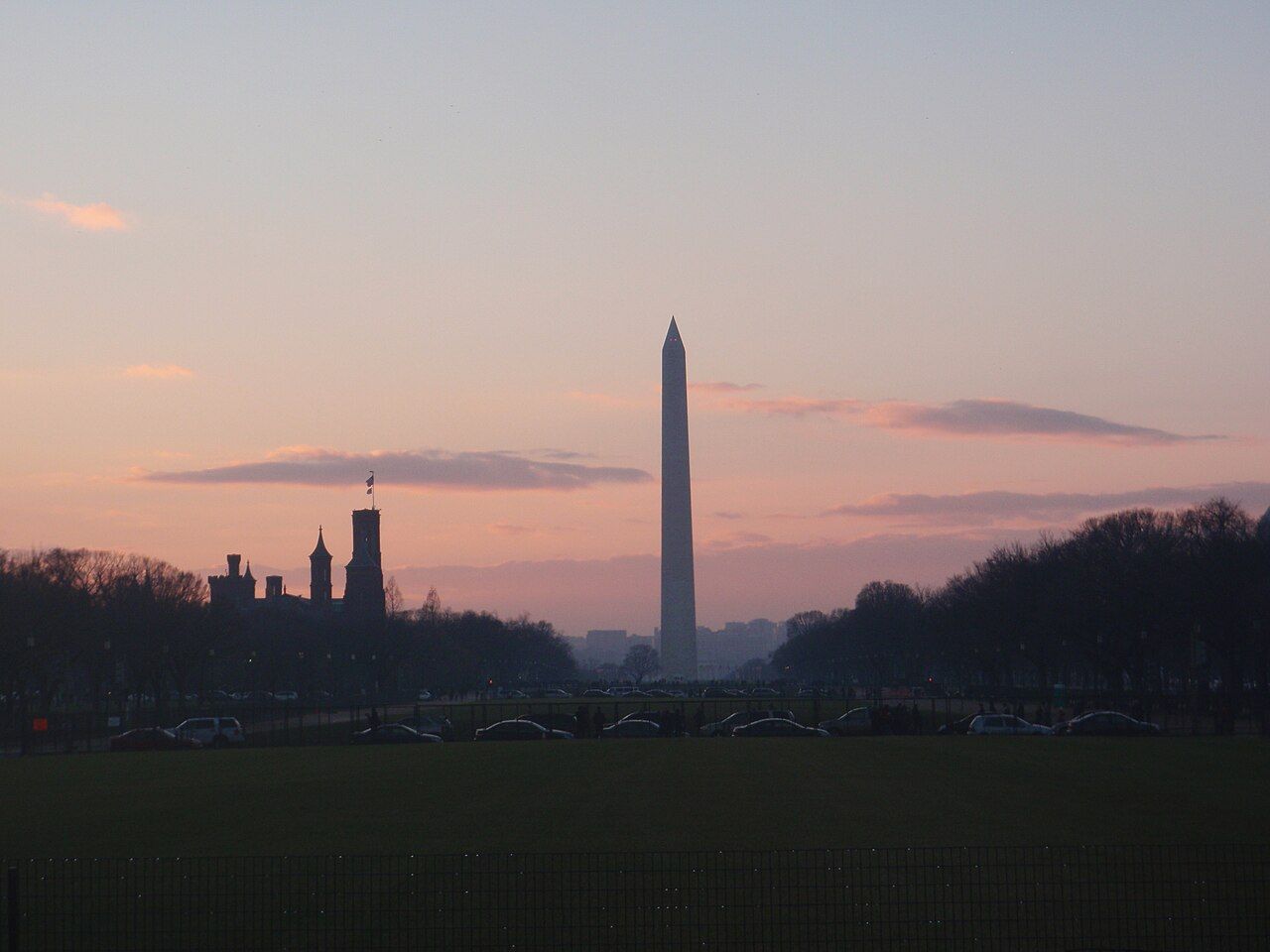
From the top of 16th Street on a clear day you can see the Washington Monument standing at the far end of the avenue, a pale needle above the trees. It is about two and a half miles away, and it marks the middle of the National Mall, the long open lawn that runs from the Capitol to the Lincoln Memorial with the Smithsonian museums lined up along its sides. Almost everyone staying in Adams Morgan spends at least a day there.
The Mall rewards a plan. It is roughly two miles from end to end, there is little shade, and the distances between monuments look far shorter than they are. Do the museums while you are fresh, save the memorials for the cooler end of the day, and finish at Lincoln as the light goes.
Three ways down
By Metro
From Woodley Park station, west of the neighbourhood across the Ellington Bridge, the Red Line runs south through Dupont Circle to Metro Center. Change there for the Blue, Orange or Silver Lines and ride to Smithsonian or Federal Triangle, both at the edge of the Mall. From Columbia Heights station, east of the neighbourhood, the Green Line runs straight down to Archives, on the north side of the Mall by the National Archives, and on to L'Enfant Plaza. Neither trip is long. Check for weekend track work before you set out, as lines are sometimes partly closed.
By bus
Buses run frequently down 16th Street toward the White House area, and other routes link Columbia Road and 18th Street with downtown. Routes and their names have changed in recent years, so look at the current map rather than an old guidebook. Avoid any advice that mentions the Circulator buses: that service has ended.
On foot
For a walk with purpose, go to 16th Street, turn south, and keep going. The avenue runs dead straight downhill past Meridian Hill Park, churches, old apartment buildings and the headquarters of societies and associations, and delivers you to Lafayette Square, directly across from the White House. From there the Ellipse and the Washington Monument are a few minutes further. Allow about an hour from 18th Street at an easy pace, and save the Metro for the way back.
If you would rather break the walk, go down through Dupont Circle and on along Connecticut Avenue, which also ends close to Lafayette Square.
A sensible order for the day
Most museums on the Mall open in the morning and close in the late afternoon, while the memorials stay open after dark. That suggests a shape for the day:
- Morning: museums. Start at the Smithsonian station and pick two museums at most. The Natural History and American History museums sit side by side on the north side of the Mall; the National Gallery of Art, which is free but not part of the Smithsonian, is just to the east; the National Air and Space Museum lies across the lawn on the south side.
- Midday: rest. Eat, sit in the shade of the sculpture gardens or the elms that line the gravel paths, and refill water.
- Afternoon: walk west. Pass the Washington Monument, the World War II Memorial and the long Reflecting Pool, with the Vietnam Veterans Memorial and the Korean War Veterans Memorial on either side.
- Dusk: Lincoln. Climb the steps of the Lincoln Memorial as the sun goes down.
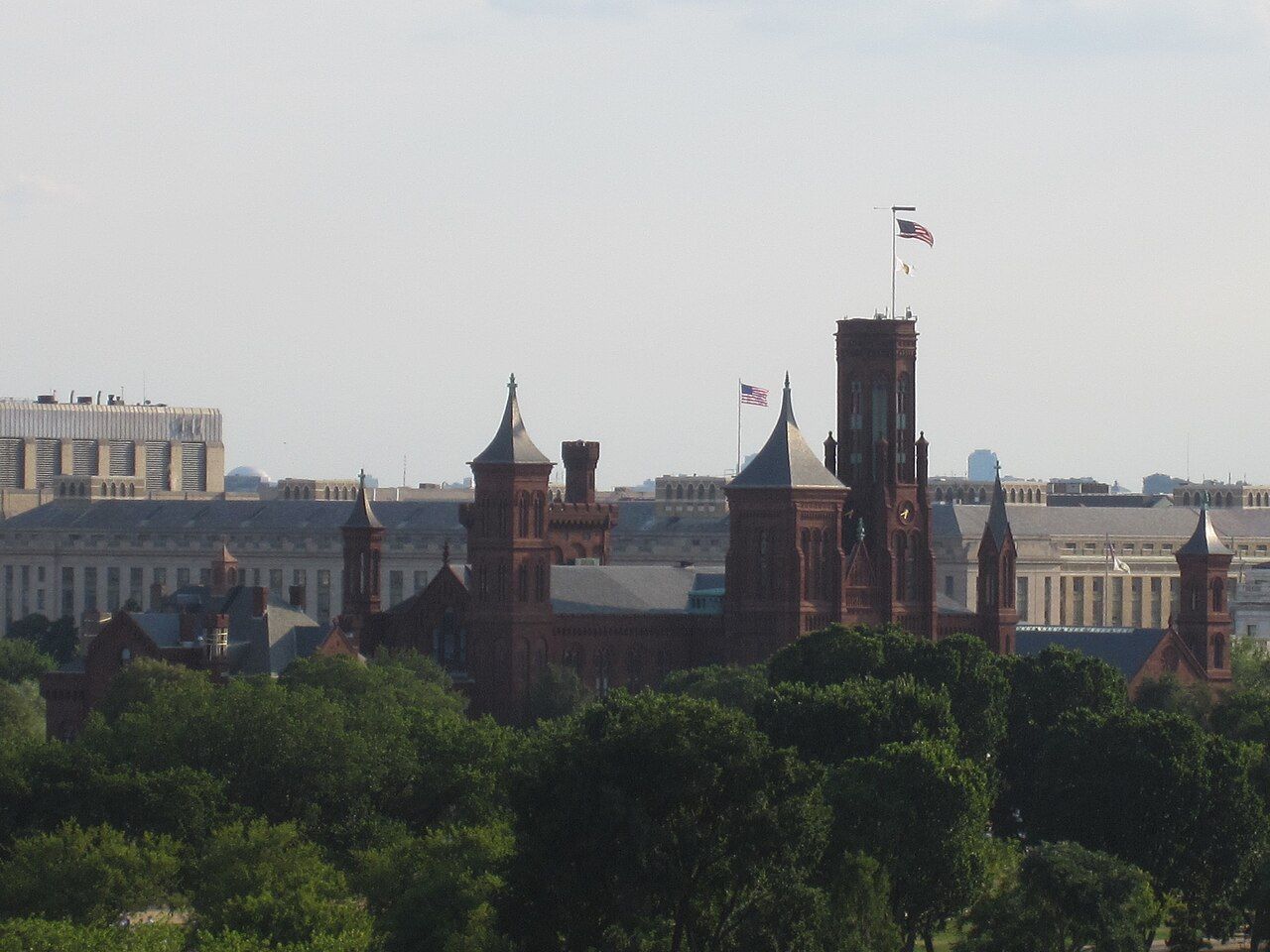
Admission to the Smithsonian museums is generally free, but some of the busiest, including the National Museum of African American History and Culture and at times Air and Space, ask for free timed passes, especially in spring, summer and on holidays. Parts of several museums close for long renovations; the red sandstone Castle, the Smithsonian's original building, has been shut for one. Check each museum's own information before you go, and expect a bag check at every entrance.
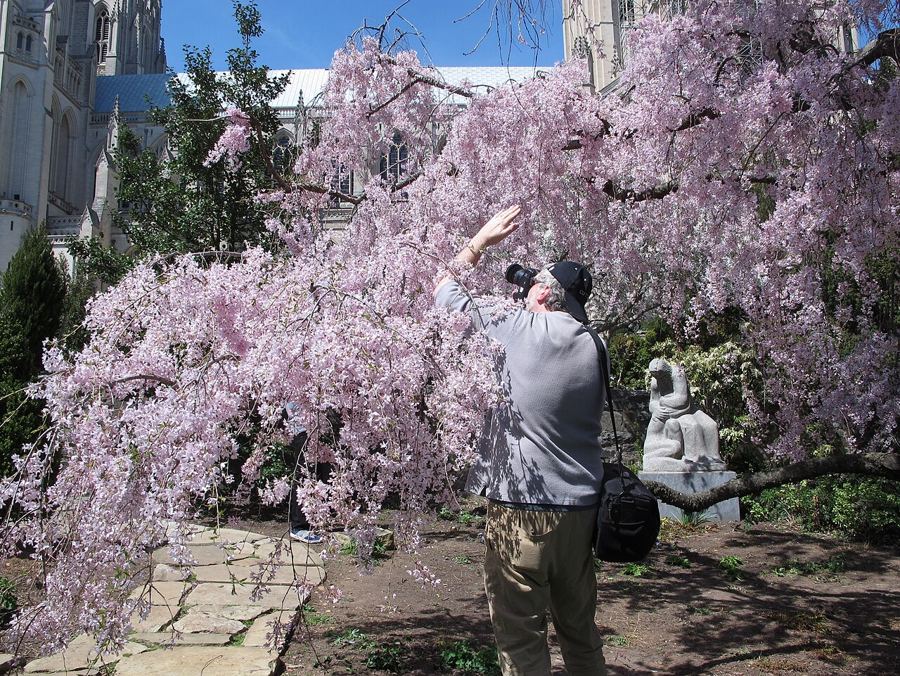 Next door: DowntownTo the cathedral through Woodley Park
The monuments, west to east
The Washington Monument is the anchor. Its marble changes colour about a third of the way up, where construction stopped for years in the mid-nineteenth century and resumed with stone from a different quarry. Going up inside requires a timed ticket, usually free but limited and booked in advance or released on the day.
West of it, the World War II Memorial surrounds a sunken plaza with fountains and pillars for each state and territory. Beyond lies the Reflecting Pool, which mirrors the monument on still days. On the north side, the black granite wall of the Vietnam Veterans Memorial cuts into the ground with the names of more than fifty-eight thousand dead; on the south side, the Korean War Veterans Memorial shows a squad of steel soldiers moving through juniper and granite. Further south, by the Tidal Basin, are the memorials to Martin Luther King Jr., Franklin Roosevelt and Thomas Jefferson, a walk worth saving for another day, or for blossom time, covered in our guide to the seasons.
Do the museums while you are fresh, save the memorials for the cooler end of the day, and finish at Lincoln as the light goes.
Lincoln at dusk
The Lincoln Memorial is the best place on the Mall to end a day. Inside the Greek temple, the seated figure of Lincoln looks east along the Reflecting Pool, flanked by the words of the Gettysburg Address and his second inaugural speech carved into the walls. On the steps below, a small inscription marks where Martin Luther King Jr. stood in 1963 to address the March on Washington.
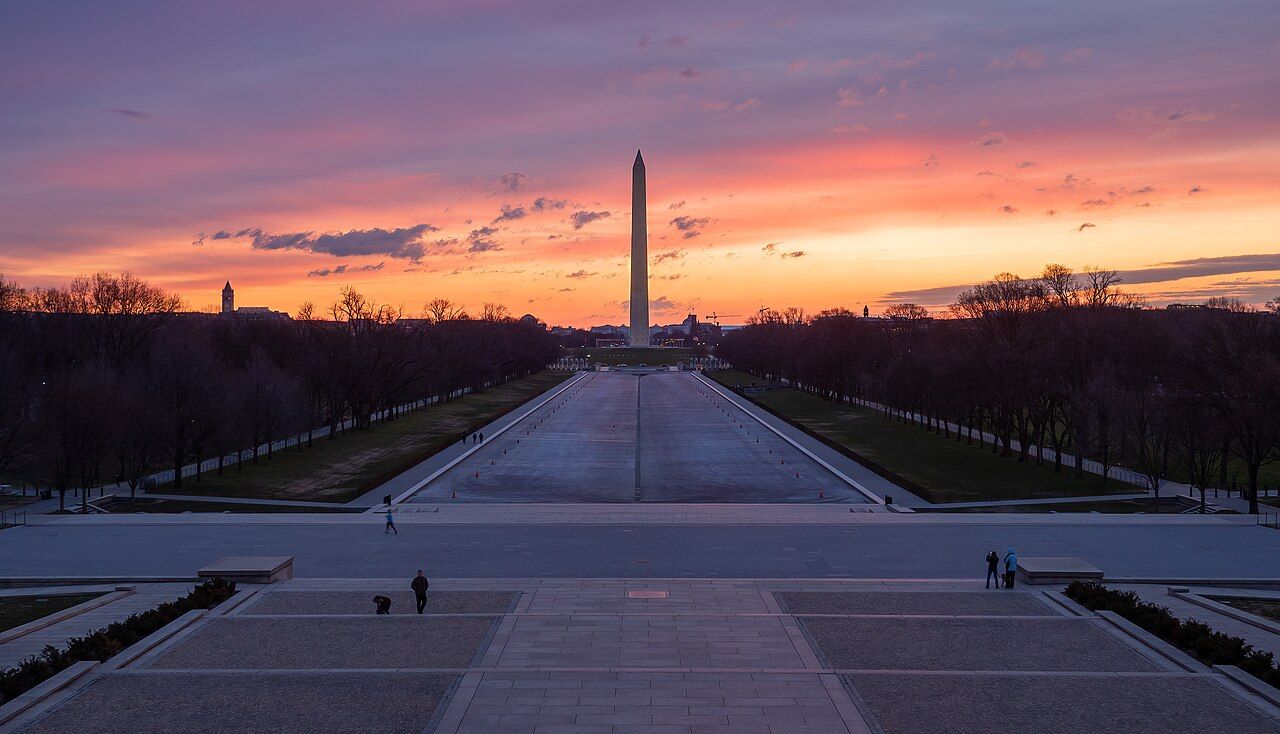
At dusk the lights come up on the statue, the Washington Monument glows at the end of the pool, and the Capitol dome shows faintly beyond it. The steps are wide enough that even on busy evenings you can find a place to sit. Stay until it is properly dark if you can.
Getting home from here takes a little planning. The nearest Metro station, Foggy Bottom, is a walk of about fifteen or twenty minutes north; buses run on Constitution Avenue; and taxis are usually easy to find along the main roads. A cab back to Adams Morgan is short.
Rest, water and comfort
- Water. Carry a bottle. There are refill points and drinking fountains around the Mall and in every museum, but the gaps between them feel long in summer.
- Shade. Scarce in the open middle; the tree-lined edges and the museums themselves are your refuges.
- Toilets. In the museums and at some memorials; plan around them.
- Food. Museum cafés and food carts are the main options; there is little else close to the lawn.
- Heat and storms. Summer afternoons are hot and humid, and thunderstorms build quickly. Be indoors before the storms arrive; the open lawn is no place to be in lightning.
- Shoes. The paths are gravel and the distances long. Wear your most comfortable pair.
Back on the hill that evening, you will appreciate how close the neighbourhood is to all of this. For more on trains, buses and getting home late, see our notes on getting around without a car.
More from this block: Into the city.