
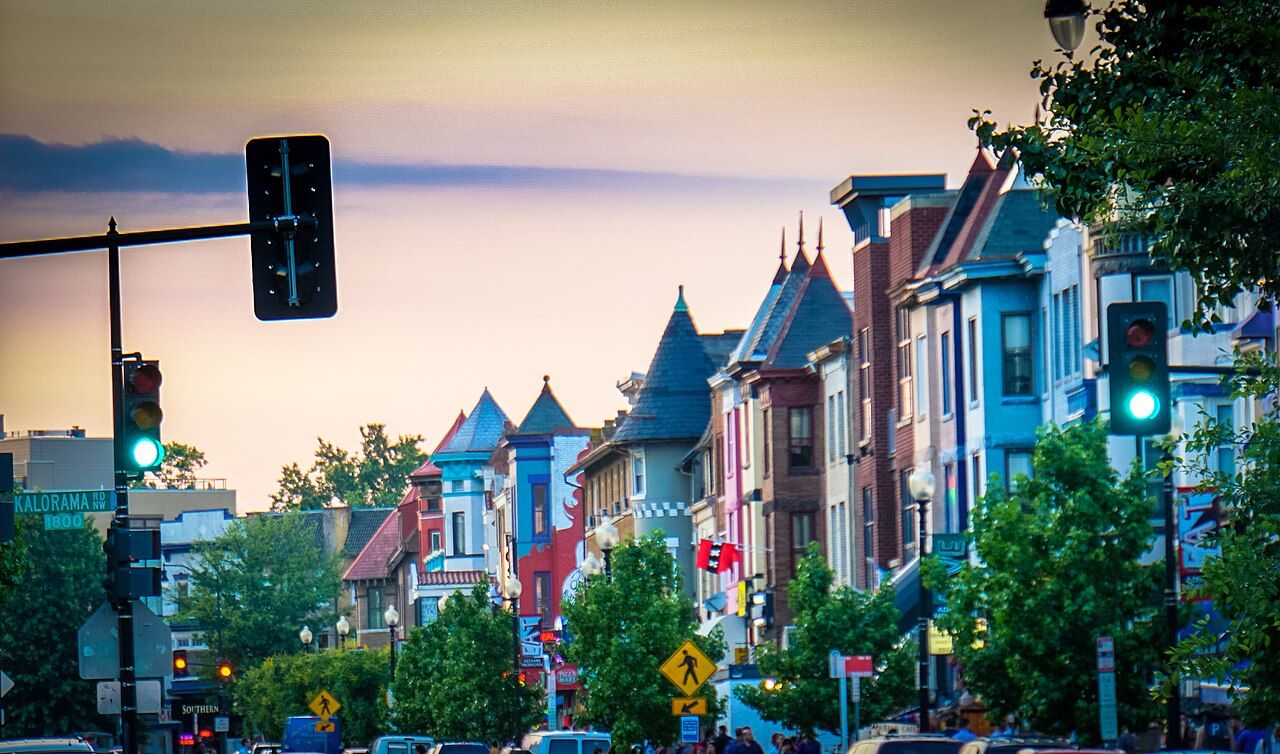
Every neighbourhood has a street that holds it together, and in Adams Morgan that street is 18th Street NW. It starts at Florida Avenue, rises gently northward past several blocks of shopfronts squeezed into old houses, and ends at the crossroads with Columbia Road. The whole stretch takes about fifteen minutes at an easy pace, yet it can fill a morning if you stop to look up, and it can feel like a different place entirely after dark.
This guide walks it from the bottom to the top, then suggests a calmer way to see it, because the street rewards people who come back to it at different hours.
Starting at Florida Avenue
The southern end sits where 18th Street meets Florida Avenue, the old boundary line of the original city. South of here the streets belong to Dupont Circle and the blocks around U Street; north of here the ground starts to climb, and you feel it in your calves before you notice it with your eyes. The grade is mild, more of a long lean than a hill, but it explains why the views open up as you go.
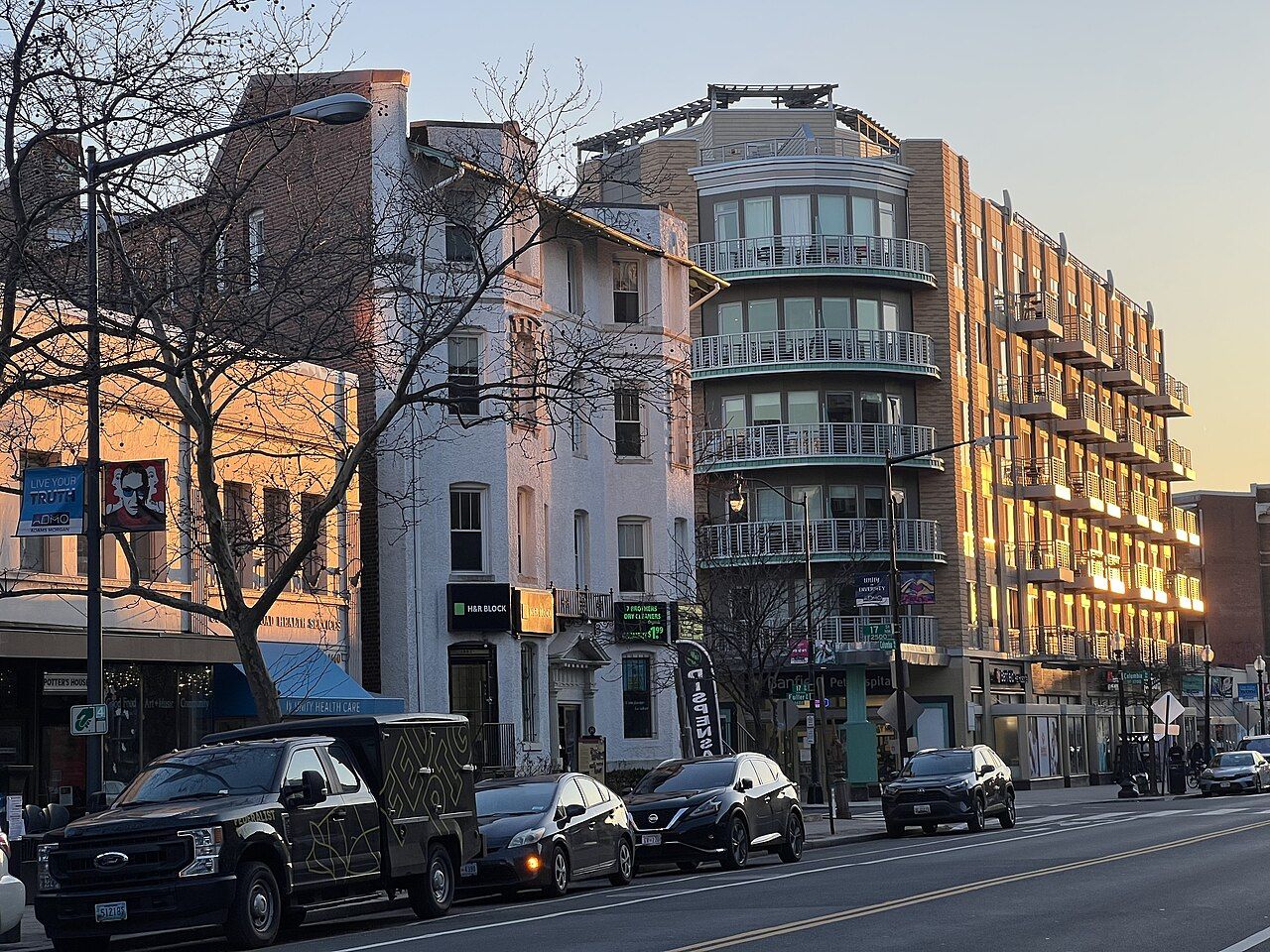
The first blocks are a mix of low commercial buildings and rowhouses that have been turned into businesses. Some of the newer apartment blocks at this end are taller and plainer, and they make the older houses around them look smaller and brighter by contrast. If you have come up from Dupont Circle on foot, this is where the city's formal avenues give way to something looser.
How to read the fronts
Most buildings on the strip began life as houses built around the turn of the twentieth century. Over the decades their ground floors were cut open for shop windows, their raised basements became separate businesses reached by a few steps down, and their upper floors gained their own doors and signs. The result is a street where a single narrow building can hold three different uses stacked on top of each other.
Look for the original house underneath. A projecting bay, a row of cornice brackets under the roofline or a round turret at a corner gives the age away even when the lower half has been rebuilt in glass. The longer story of these houses, and how their builders worked, is told in our guide to reading a Washington rowhouse.
Colour is the other clue. Many fronts are painted in strong shades, from deep red and mustard to sky blue and lime, and the paint often stops at a party wall where the neighbour chose something else. Here and there a side wall carries a large painted scene; the tradition behind those is covered in the murals of Adams Morgan.
- Upper-floor doors: a staircase door squeezed beside a shop window usually leads to a separate business above.
- Basement steps: a short flight down to a half-sunk doorway is a sign of the house's original raised basement.
- Rooftop decks: many buildings have added terraces, which you notice mostly from the sound on a warm evening.
The street by day
In daylight the strip is a working neighbourhood street. Delivery vans park where they can, residents walk dogs, and people sit outside with coffee where the pavement is wide enough. Mornings are the quietest time, and early on a weekday you can stand in the middle of a block and hear birds from the back gardens.
Daytime is the best time to notice detail: the pressed brick, the old iron railings, the painted lettering on a side wall that has faded but not gone. It is also when the street's mix of food is easiest to see. Shop windows and menus point to Ethiopian, Salvadoran, Mexican, Middle Eastern and many other kitchens within a few blocks, which is part of how the neighbourhood earned its reputation; our story on what the neighbourhood eats explains the cuisines without sending you to any one door.
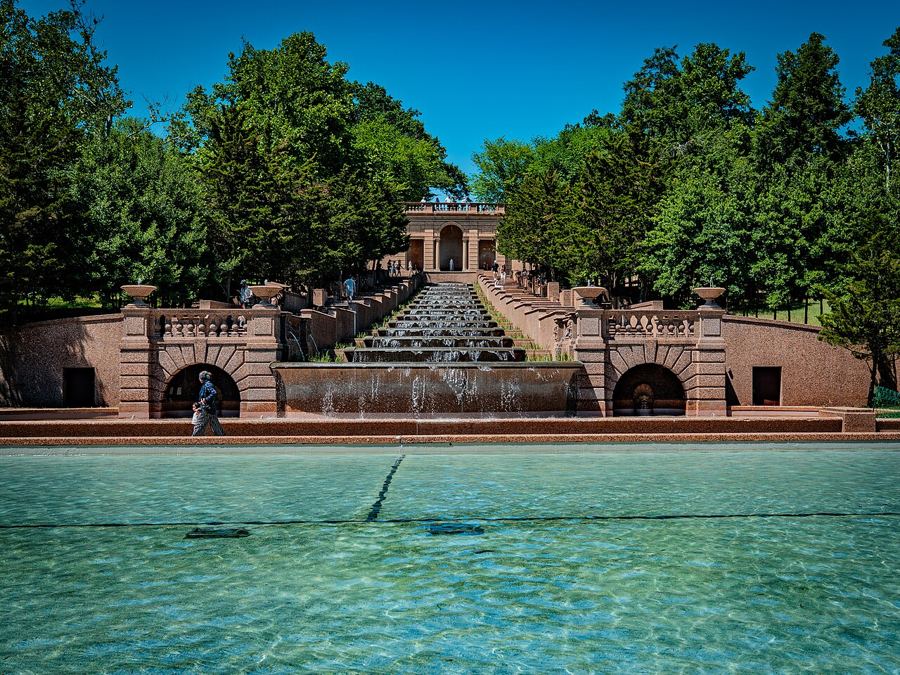 Next door: ParksMeridian Hill Park and its cascade
The street by night
After dark, and especially from Thursday to Saturday, 18th Street becomes one of the city's best-known nightlife strips. Music spills out of upper windows, queues form at doors, and the pavements fill with groups moving between places. Late in the night the famous oversized slices of pizza appear in many hands, a local habit that has outlived plenty of the venues around it.
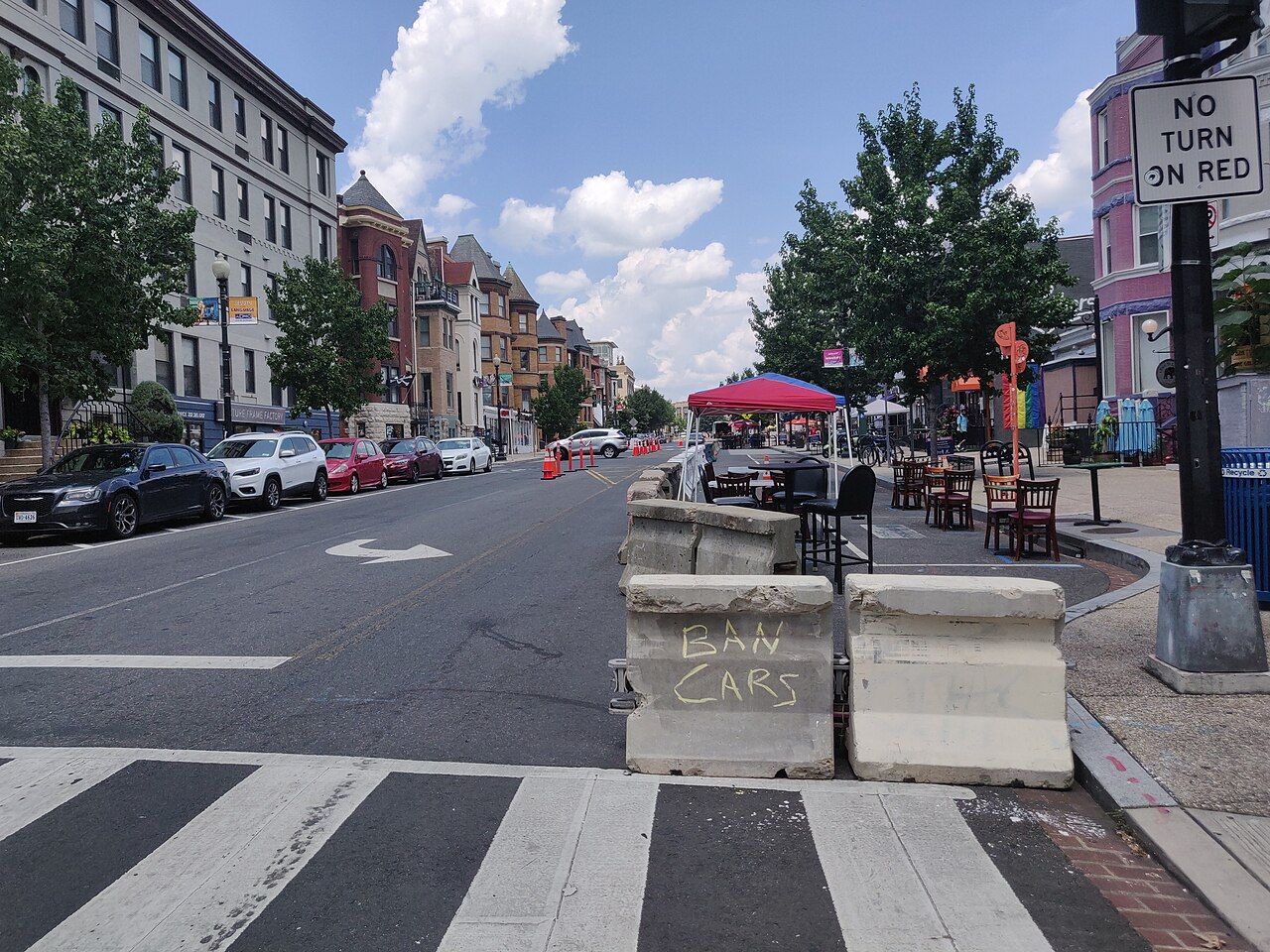
The night mood is lively and generally good-natured, but it is loud, and the crowds thin unevenly. Keep your phone and bag close, use the busier side of the street, and if you are staying nearby, expect to hear the street until well after midnight on a weekend. Police and street closures are sometimes used on the busiest nights to manage the crowds; plans change, so do not count on any particular arrangement.
The night mood is lively and generally good-natured, but it is loud, and the crowds thin unevenly.
Weekends, noise and what to expect
If you are choosing where to sleep, the side streets one or two blocks off the strip are usually far calmer than rooms facing it. The noise is concentrated on a narrow corridor, and the houses act as a wall. Weekday nights are much quieter than weekend ones, and Sunday evenings can feel almost sleepy.
Once a year the street is closed to traffic for a neighbourhood festival, usually in September, when stages, food stalls and crowds take over from end to end. The details are in our guide to Adams Morgan Day; the date is set each year.
| When | What it feels like |
|---|---|
| Weekday morning | Quiet, deliveries, dog walkers, open sightlines |
| Weekend afternoon | Busy pavements, people eating outside |
| Friday and Saturday night | Crowded, loud, late |
| Sunday evening | Calm, many places closed or winding down |
A quieter way to walk it
For a calmer look, walk 18th Street early on a weekend morning, when the night has been swept up and the day has not started. Go up one side and come back down the other, so you see each block twice from a different angle. At the top, the crossroads with Columbia Road opens into a small plaza that wakes up early on Saturdays.
Then step off the strip. Turn onto any of the side streets, such as Belmont Road, Kalorama Road or Wyoming Avenue, and within a few steps the shopfronts give way to porches, trees and front gardens. Those blocks show what the main street looked like before it was a main street, and they are where you understand why people choose to live here.
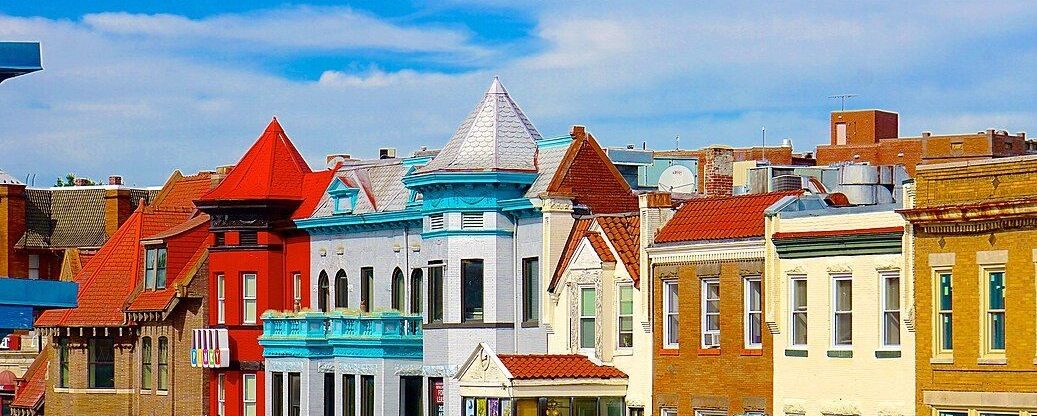
Finally, give the street a second look at dusk. The upper windows light up one by one, the paint colours deepen, and for an hour or so the strip sits between its two lives.
More from this block: 18th Street and around, or back to the six doors.