
Ask people what Adams Morgan is known for, and food comes up quickly. For decades its two main streets have held kitchens from many parts of the world, packed into converted rowhouses and small shopfronts. Restaurants open and close often; the dishes stay. Knowing them lets you walk in anywhere and know what to order.
Why so many cuisines in so few blocks
The variety follows the neighbourhood's history. From the 1960s onward Adams Morgan became a home for families from Latin America, especially El Salvador and other Central American countries, and later for many people from Ethiopia and Eritrea, along with newcomers from West Africa, the Caribbean, the Middle East and Asia. They opened restaurants and groceries to feed their own communities, and the rest of the city followed them in.
For a while in the 1980s and 1990s the neighbourhood was the best-known place in Washington for Ethiopian food. Many of those cooks later moved to other parts of the city and the suburbs, but the tradition is still present here. You can see the mix by walking the strip described in our guide to 18th Street and reading the menus in the windows.
Ethiopian food: injera and sharing
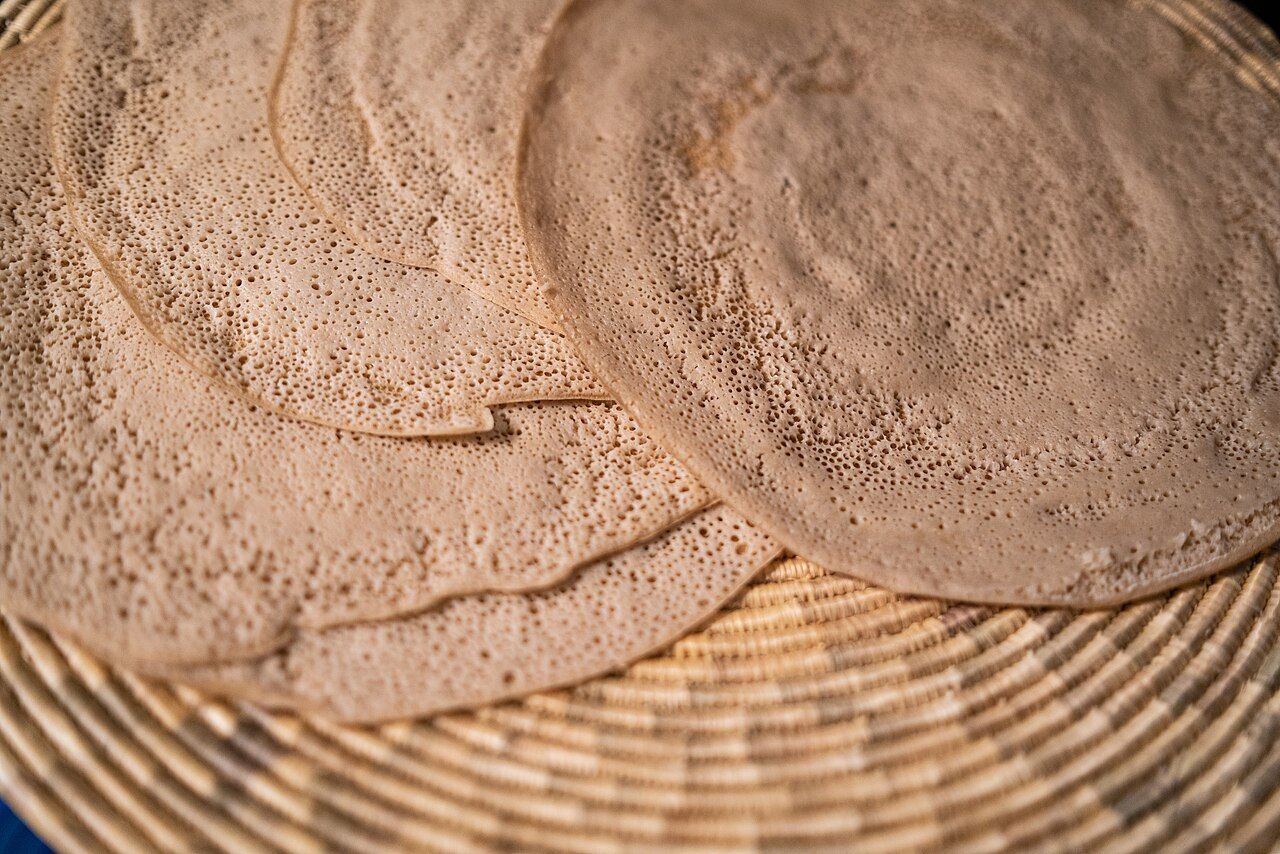
An Ethiopian meal is built on injera, a large, soft, spongy flatbread with a slightly sour taste, traditionally made from teff, a tiny grain grown in the Ethiopian highlands. Stews and vegetable dishes are spooned on top of a large round of injera, and more injera comes rolled on the side. You tear off a piece with your right hand and use it to pick up the food. There are usually no forks unless you ask.
Some common dishes:
- Doro wat: a deep red chicken stew, rich with berbere spice and often served with a hard-boiled egg.
- Misir wat: red lentils cooked with spice, one of the most popular vegetarian choices.
- Tibs: pieces of beef or lamb sautéed with onions and peppers.
- Kitfo: minced beef seasoned with spiced butter and chilli, often served raw or lightly cooked; ask if you prefer it cooked through.
- Shiro: a smooth chickpea stew.
Many Ethiopian Christians fast from animal products on certain days, so menus often have a generous vegetarian combination. It is a good way to try several dishes at once.
The coffee ceremony
Coffee holds a special place in Ethiopian culture, and the country is often described as the birthplace of the coffee plant. In the traditional ceremony, green beans are washed and roasted in a pan over a small fire, then passed around so everyone can smell the smoke. The beans are ground by hand, brewed in a clay pot called a jebena, and poured into small cups from a height. Incense is often burned at the same time.
A full ceremony takes time and is usually served in several rounds. Some restaurants offer it, often on request or at certain times. Even a simple cup of Ethiopian coffee, strong and fragrant, is a good end to a meal.
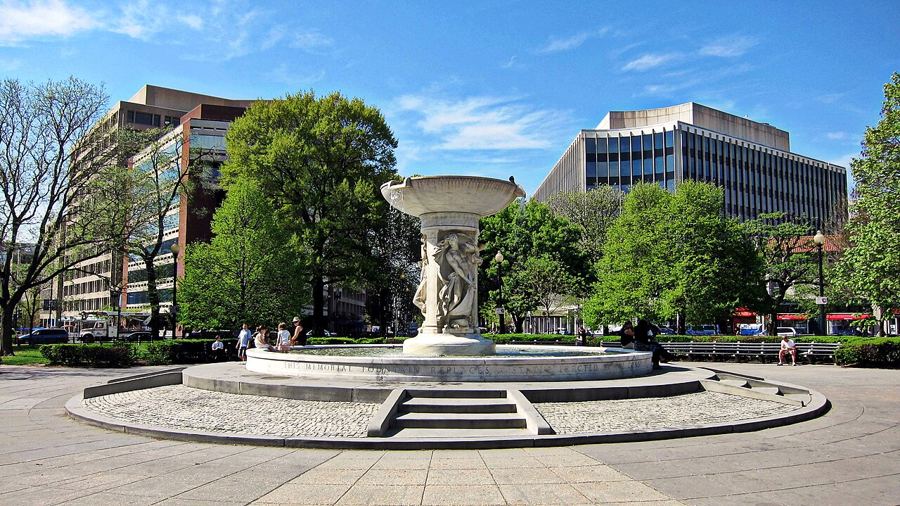 Next door: Next doorDown the hill to Dupont Circle

Salvadoran pupusas and Central American plates
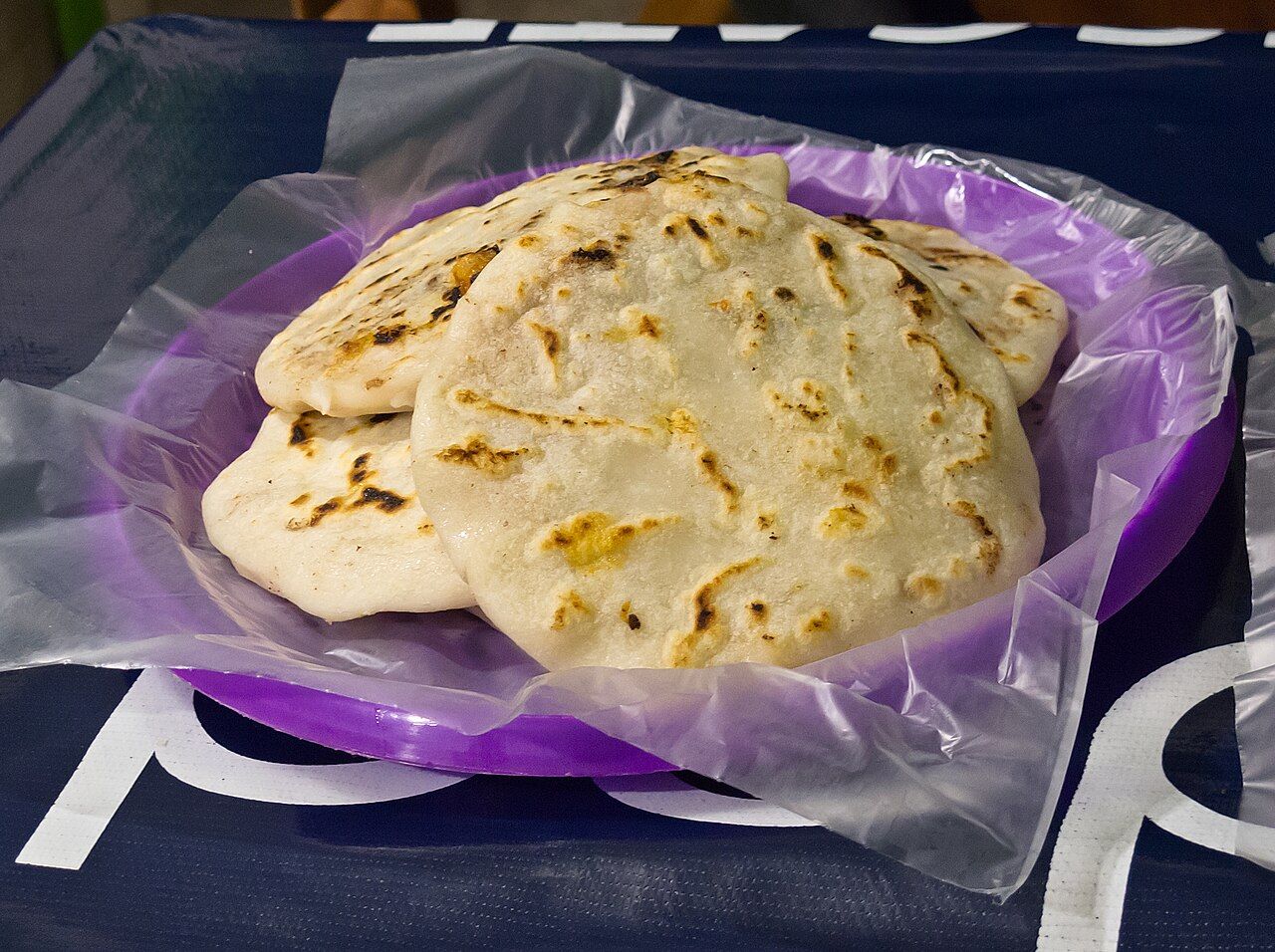
The pupusa is the national dish of El Salvador: a thick, round corn tortilla stuffed before cooking with fillings such as cheese, beans, chicharrón (seasoned pork) or loroco, an edible flower bud with a green, slightly earthy taste. It is cooked on a flat griddle until spotted brown and served hot.
Pupusas come with curtido, a tangy pickled cabbage slaw with carrot and oregano, and a thin tomato salsa. You eat them with your hands or a fork, piling curtido on top of each bite. One or two make a snack; three or four make a meal. Pupusas made with rice flour instead of corn are also common.
Menus at Central American kitchens often also include fried plantains with beans and cream, tamales wrapped in banana leaves, grilled meats with rice, and fresh fruit drinks. Mexican food is common too, with tacos, enchiladas and soups. The bakeries and groceries along Columbia Road on a Saturday morning show the same cuisines in their everyday form.
Bakeries, the jumbo slice and late nights
Latin American bakeries are a type worth knowing. Their glass cases hold sweet breads in many shapes, pastries filled with guava or cream, and cakes sold by the slice. You pick what you want with tongs onto a tray and pay at the counter. They are good for breakfast or for a snack on a walk.
Then there is the jumbo slice. Late at night on weekends, when bars empty, crowds line up for slices of pizza so large they hang well over the edges of the paper plate. It is part of the neighbourhood's night culture, and people have argued for years about who started it. It is not refined food, but it is a local ritual.
The street's food is at its most concentrated during the annual festival, when stalls line the street; see our Adams Morgan Day guide.
Ordering and eating well
- Go with friends and share; most of these cuisines are made for it.
- Ask about spice levels. Berbere can be hot, and some salsas are fiery.
- Check whether a place takes cards; some smaller kitchens prefer cash.
- Look at what other diners are eating and do not be shy about asking.
Prices run from cheap counter food to sit-down dinners.
More from this block: How the neighbourhood came to be.