
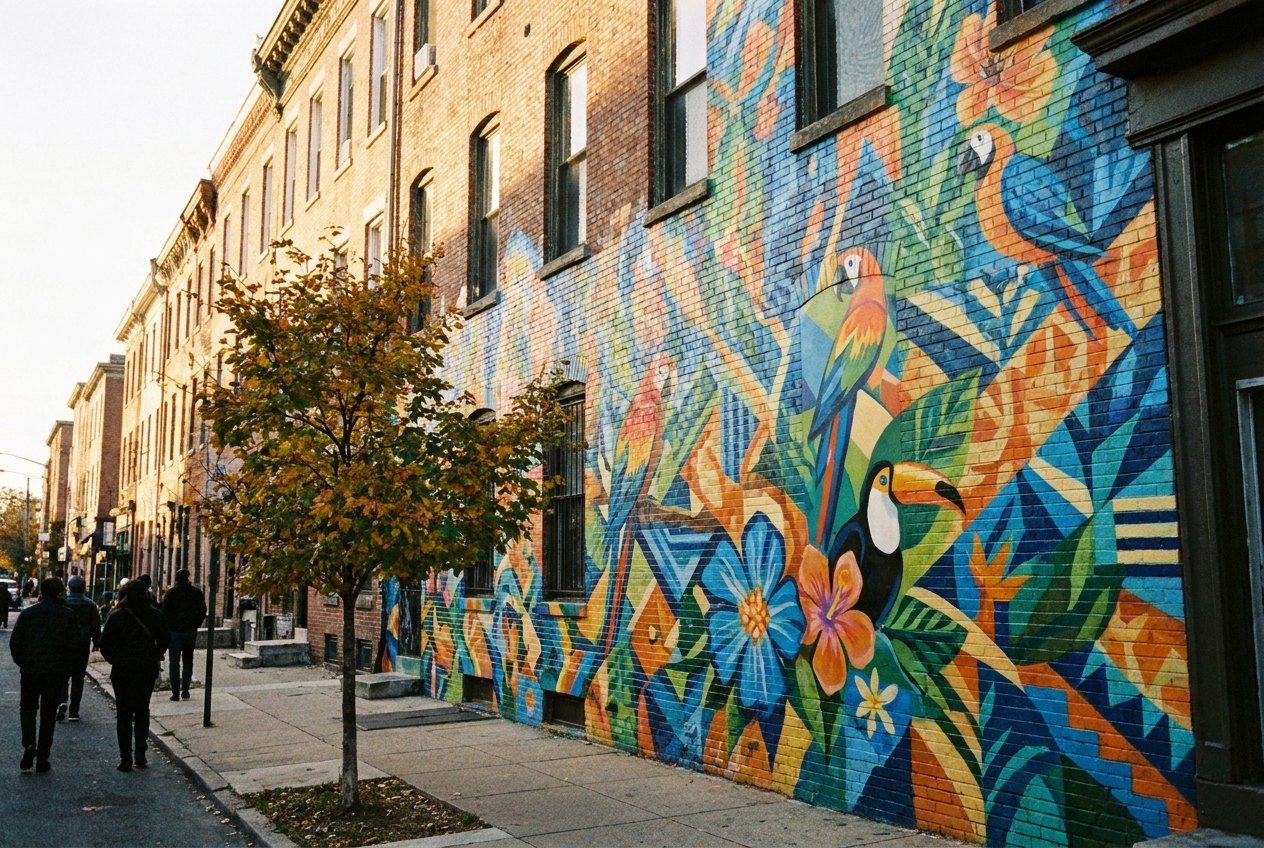
Paint is part of how Adams Morgan speaks. Walk any few blocks around 18th Street and Columbia Road and you will see bright house fronts, side walls covered in scenes, and smaller pieces tucked into alleys and over doorways. Some are decades old and carefully restored; others went up last season and may be gone next year.
This guide is not a map of every work, because the walls change too often for that. It is a way of looking at them.
A tradition that grew with the neighbourhood
From the late 1960s and through the 1970s, Adams Morgan became one of the main arrival points in Washington for families from Latin America, joining long-established Black and white residents and newcomers from Africa, the Caribbean and Asia. Community organisations, churches and artists in that period used murals to say who lived here and what they cared about, much as artists did in other American cities at the time.
Some of the oldest surviving works date from that era. They were painted with help from neighbours, and several have been restored over the years after weather and time wore them down. The style often owes a debt to the Mexican mural movement of the early twentieth century: big figures, bold outlines and stories told across a whole wall.
The habit of painting spread beyond formal murals. Many rowhouse fronts on the commercial streets are coloured in strong shades, and the effect of a block of red, yellow and turquoise houses is itself a kind of public picture. Our guide to 18th Street from end to end shows where those fronts are thickest.
What the images often say
Certain themes come up again and again. Community is the strongest: crowds of faces, families, people working together, hands joined. Many works draw on Latin American imagery, with landscapes, folk motifs, musicians and historical figures, and some include Spanish words or phrases. Others honour music, especially the jazz and go-go traditions of the wider city, or celebrate particular people who mattered to the neighbourhood.
Some murals carry a message about housing, immigration, peace or civil rights. They were often made in response to change, including the arrival of new money and rising rents, so reading them closely tells you something about the arguments the neighbourhood has had with itself. The longer story of how residents organised is told in our history of the neighbourhood's name.
Newer pieces lean toward colour and pattern, animals, portraits and playful scenes. Many are commissioned by property owners or community groups, and some are painted during festivals.
How to look at them respectfully
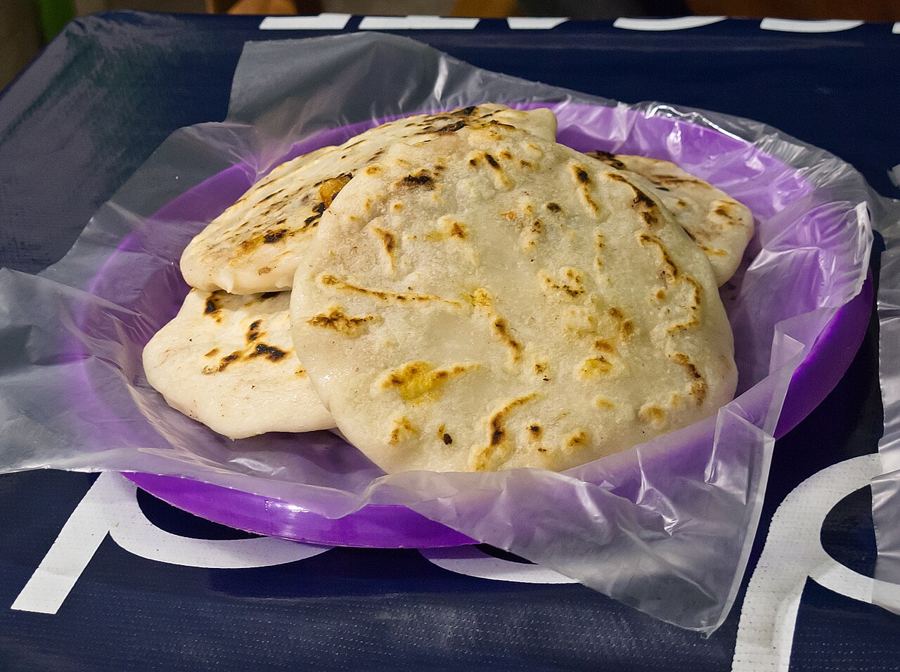 Next door: RootsMany kitchens: what the neighbourhood eats
Murals sit on private buildings and in front of people's homes, so a little care goes a long way.
- Stay on the pavement or public alley; do not climb fences, steps or walls for a better angle.
- Do not touch painted surfaces. Oils from hands and scraping bags wear them down.
- If a resident is sitting on a stoop beside a wall, a nod or a quick word before you photograph goes down well.
- Keep group photos brief on narrow pavements so others can pass.
- If you share a photo, mention where you saw the work rather than presenting it as your own.
Light matters too. Side walls facing south or west glow in the late afternoon, while those facing north look flat and cool for most of the day. An overcast morning is surprisingly good for photographing colour, because there are no hard shadows from wires and trees.
Why the walls keep changing
A painted wall is never permanent. Sun bleaches the colours, rain and freezing winters lift the paint, and a damp brick wall can shed a mural within a few years. Buildings are sold, repainted or torn down, and new construction sometimes hides an old wall behind a new one.
Some murals are restored by the original artists or by new ones working from photographs. Others are painted over and replaced by something different, which upsets some residents and pleases others. Graffiti and tags appear too, and the line between commissioned art and unauthorised painting is sometimes argued over in public meetings.
All of this means any list of murals goes out of date quickly. A wall you saw in a photograph may have been repainted since.
A loose route for mural hunting
Start at the crossroads of 18th Street and Columbia Road and look at the walls in every direction. Then walk south down 18th Street, glancing down each side street and alley, since many works face away from the main road. Loop back up through the residential blocks to the west, where front gardens and painted doors add smaller touches.
Afterward, walk east along Columbia Road and look above the shop signs, where older lettering and painted panels sometimes survive. The whole loop can take an hour or two depending on how often you stop.
If you enjoy this kind of walk, the neighbourhoods nearby have their own painted walls. The corridor described in our guide to U Street has well-known portraits of musicians and civic figures.
Leaves, bare branches and festival paint
Any time of year works, though trees in full leaf hide some walls in summer and bare branches reveal them in winter. Weekday mornings are calm, while the annual neighbourhood festival in September usually brings live painting and crowds. Every wall here is free to look at.
More from this block: 18th Street and around.