
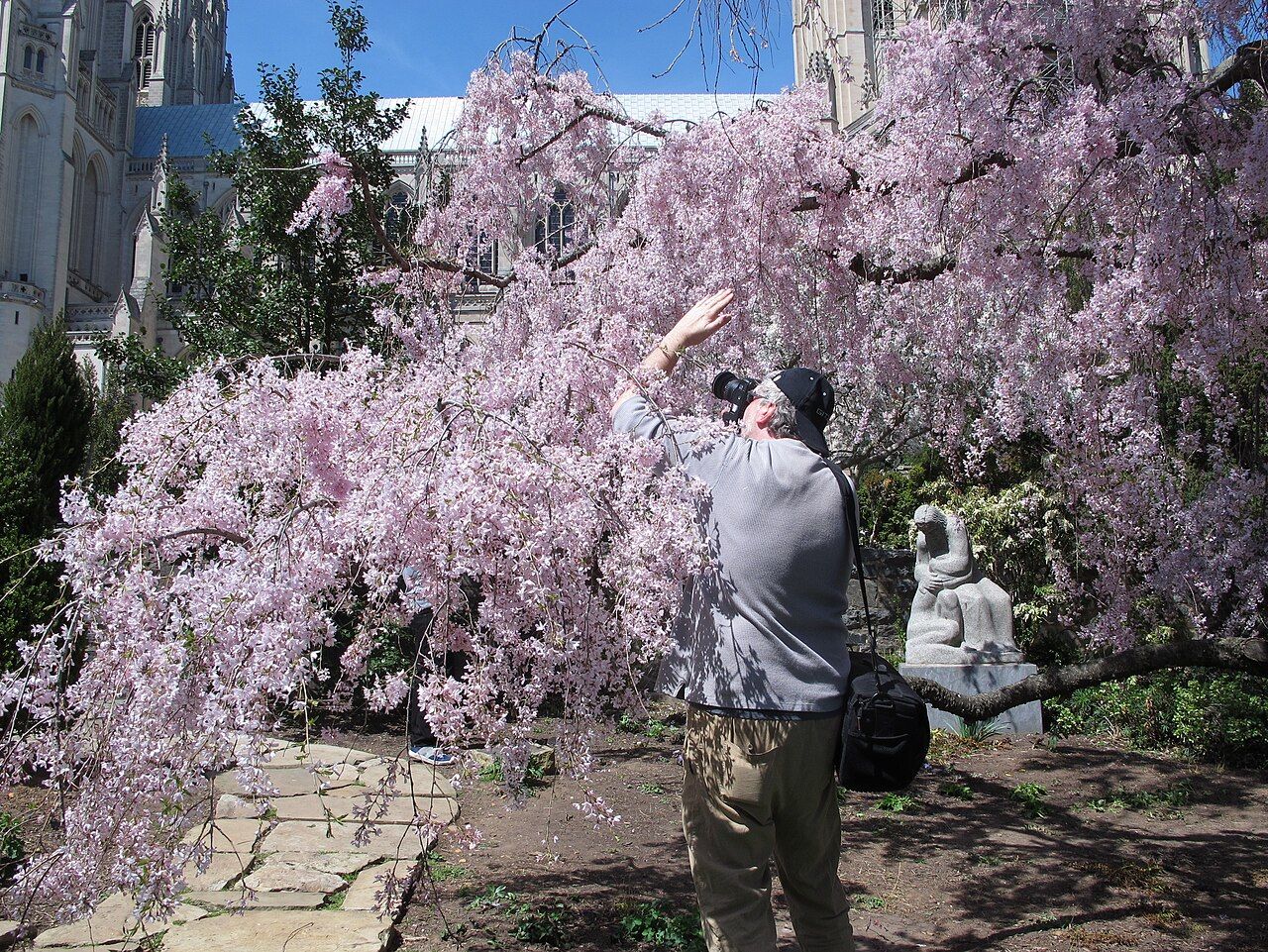
From the Ellington Bridge on a clear day you can pick out a tall pale tower on the skyline to the west, standing above the trees on a ridge. That is Washington National Cathedral, built on Mount St. Alban, one of the highest points in the city. It looks medieval, and it is built the medieval way, stone on stone, but most of it rose during the twentieth century. Getting there from Adams Morgan is an outing in itself, through the quiet streets of Woodley Park and up the hill.
The walk through Woodley Park
Cross Rock Creek on the Ellington Bridge and you arrive at Connecticut Avenue by the Woodley Park station. From there, head west along Woodley Road. The street climbs steadily past large houses, many with deep porches and lawns, before levelling out near the cathedral grounds. Woodley Road leads you almost to the north side of the cathedral close.
The walk from 18th Street takes about forty minutes, a little more if you stop to look at the houses. It is a gentle climb most of the way, with a couple of steeper pitches. If you would rather save your legs, take the Red Line to Woodley Park and walk only the second half, or come by one of the buses that run up Wisconsin Avenue from Georgetown and along other routes nearby.
- The cathedral grounds have several gates; the main west front faces Wisconsin Avenue.
- Coming back, the walk is mostly downhill to Connecticut Avenue.
- Leave time to wander the residential streets of Cleveland Park just to the north if you enjoy old houses.
A Gothic church of the twentieth century
The foundation stone was laid in 1907 and the last pinnacle went up in 1990, so the building took most of the century to finish. Over those decades masons and carvers worked in the old way, with stone blocks, pointed arches and flying buttresses, and the result is one of the largest churches in the United States. It belongs to the Episcopal Church, but it also plays a national role, hosting state funerals and services of prayer at times of national grief or celebration.
Inside, look for the long nave with its ribbed vault, the high altar, chapels on several levels, and dozens of stained-glass windows. One of the best known, the Space Window, celebrates space flight and includes a small piece of rock brought back from the moon. Woodrow Wilson is buried in the cathedral, the only president laid to rest in the city, and the ashes of Helen Keller and her teacher Anne Sullivan are interred here too.
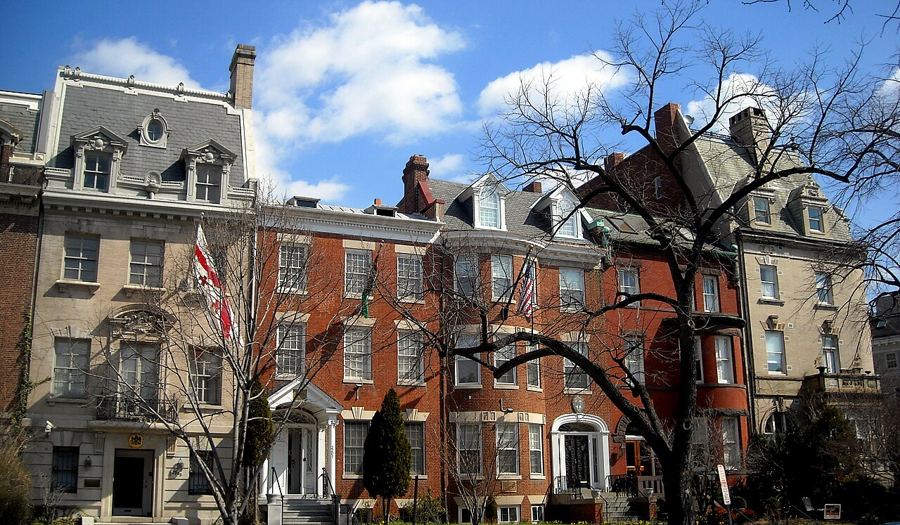 Next door: Next doorKalorama and Embassy Row
Gargoyles and grotesques
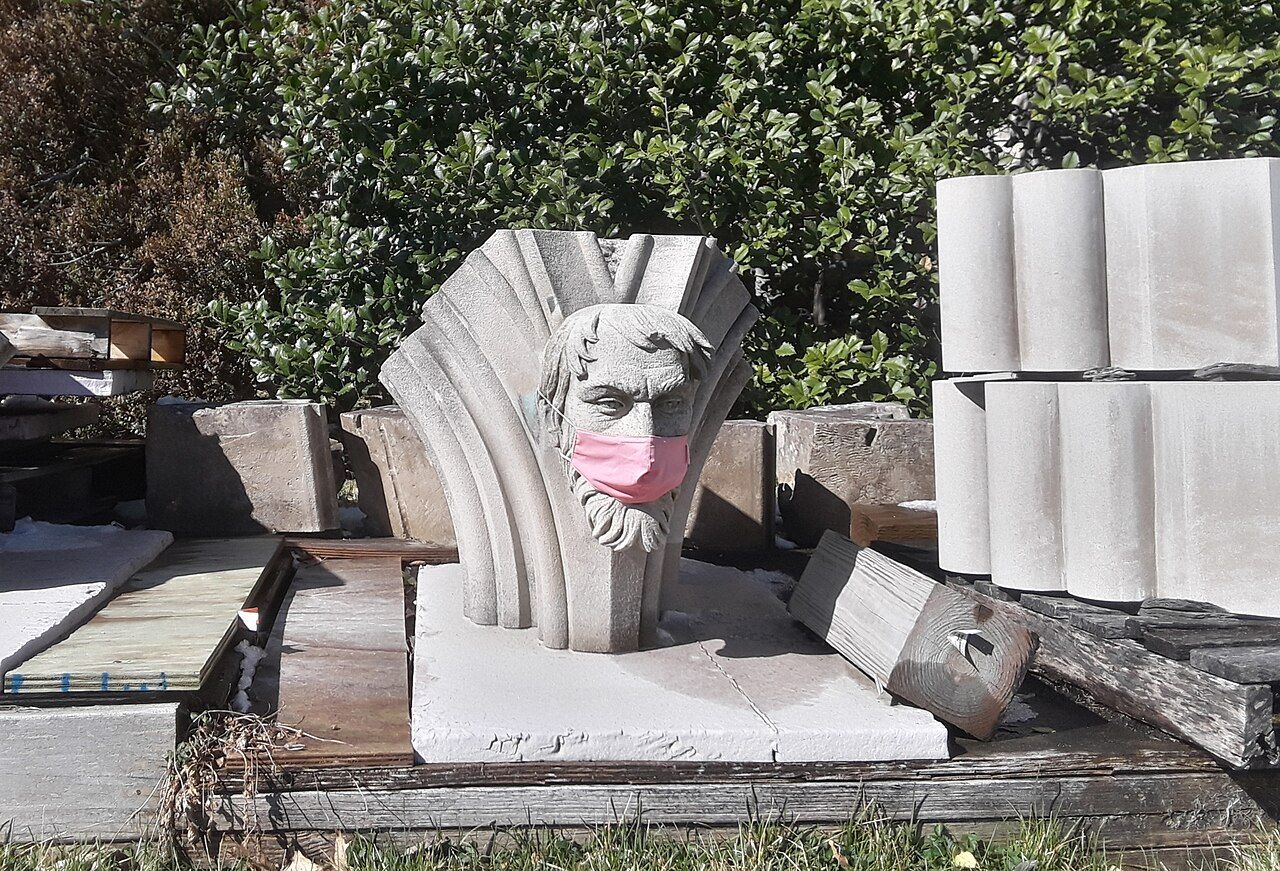
The outside of the building swarms with carved creatures. Strictly speaking, gargoyles are the ones that carry rainwater away through their mouths; the rest, which simply decorate, are grotesques. There are hundreds of them, many designed in the late twentieth century, and they range from traditional monsters to animals, caricatures and odd modern subjects.
The most famous is a head of Darth Vader, high on the north-west tower, which came out of a design competition for children in the 1980s. It is hard to find without help, and binoculars make a big difference. Walk slowly round the outside of the building, look up at the corners of the towers and the tops of the buttresses, and you will find animals, scowling faces and figures of ordinary people among the monsters. Some tours focus on the carvings; check the schedule.
The Bishop's Garden and Olmsted Woods
On the south side of the cathedral, steps lead down into the Bishop's Garden, a walled garden laid out in the early twentieth century in the spirit of a medieval close. It has boxwood, herbs, old roses, stone walls and an arched gateway, with small paths and benches tucked among the planting. It is usually open to the public without charge and is one of the most peaceful places in Washington, especially in spring.
Below it, Olmsted Woods covers the slope with native trees and a winding path. Together the garden and woods make a fine place to rest before the walk back. If you like gardens and green slopes, our guide to Meridian Hill Park makes an interesting comparison: two early twentieth-century landscapes in the Italian and English manners.
The earthquake and the repairs
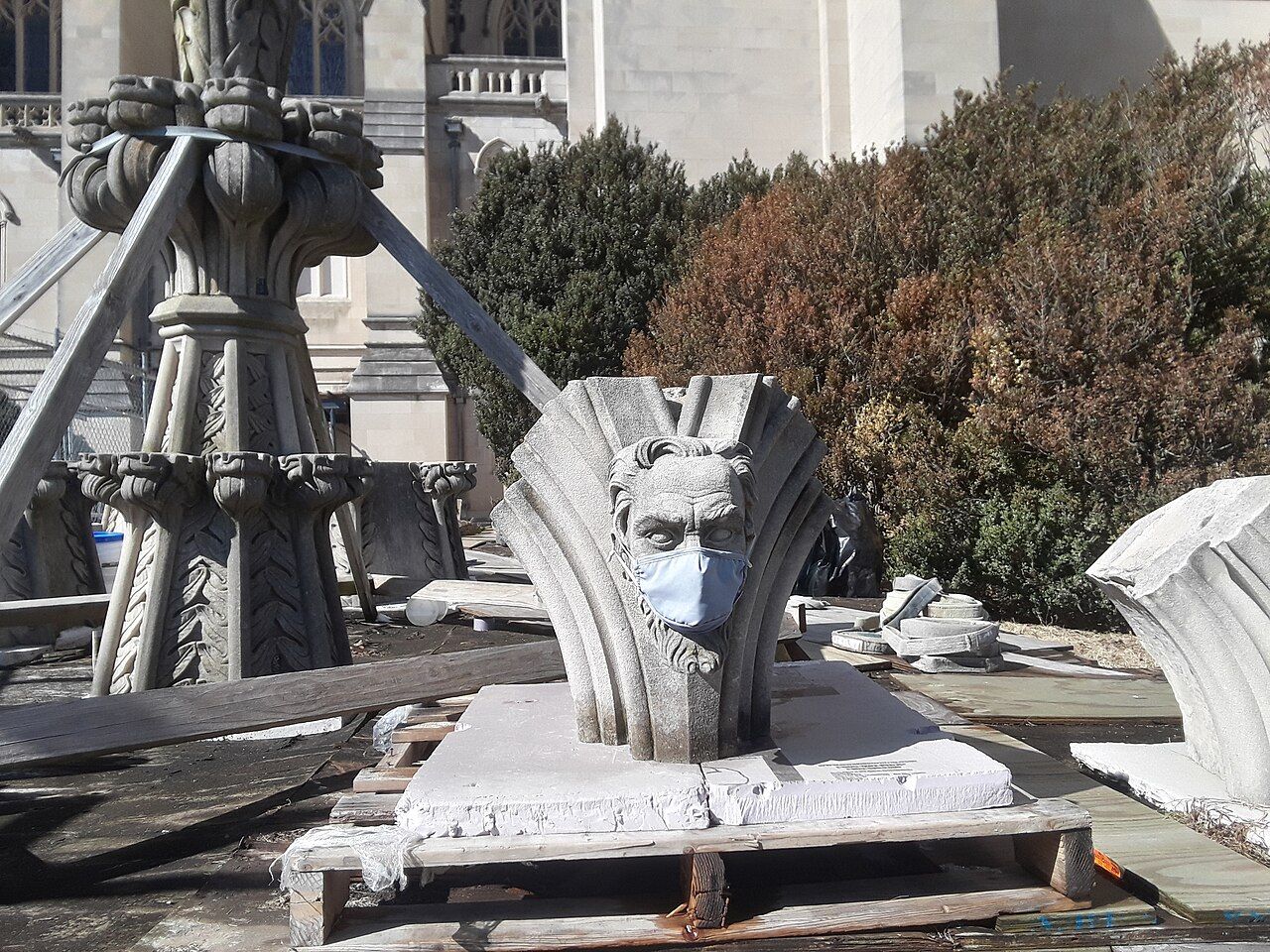
In August 2011 an earthquake centred in central Virginia shook Washington. The cathedral took serious damage: pinnacles toppled from the central tower, carved stones were dislodged, and cracks opened in the vaults. The building was closed for a time and has been under repair ever since, a slow process funded largely by donations and carried out by stone carvers working much as their predecessors did.
Depending on when you come, you may see scaffolding, fenced areas or missing pinnacles waiting to be restored. The damage has also opened a rare chance to watch masons at work. Some areas, including parts of the towers, may be closed while work continues.
Visiting practicalities
- Entry. Services are free and open to all. Sightseeing visits outside services usually carry an admission charge, and guided and special tours cost extra.
- The view. A gallery high in the west towers looks out over the city and beyond, but access depends on tour schedules and repair work.
- Music. The organ, the choirs and the carillon bells are a reason to come for a service or concert; check the calendar.
- Season. Spring is best for the garden; December brings seasonal services and music, and crowds to match.
On the way back, you can drop down from Woodley Park toward the National Zoo on Connecticut Avenue, or cross the bridges over Rock Creek in the last light and walk home to 18th Street.
More from this block: Into the city.