
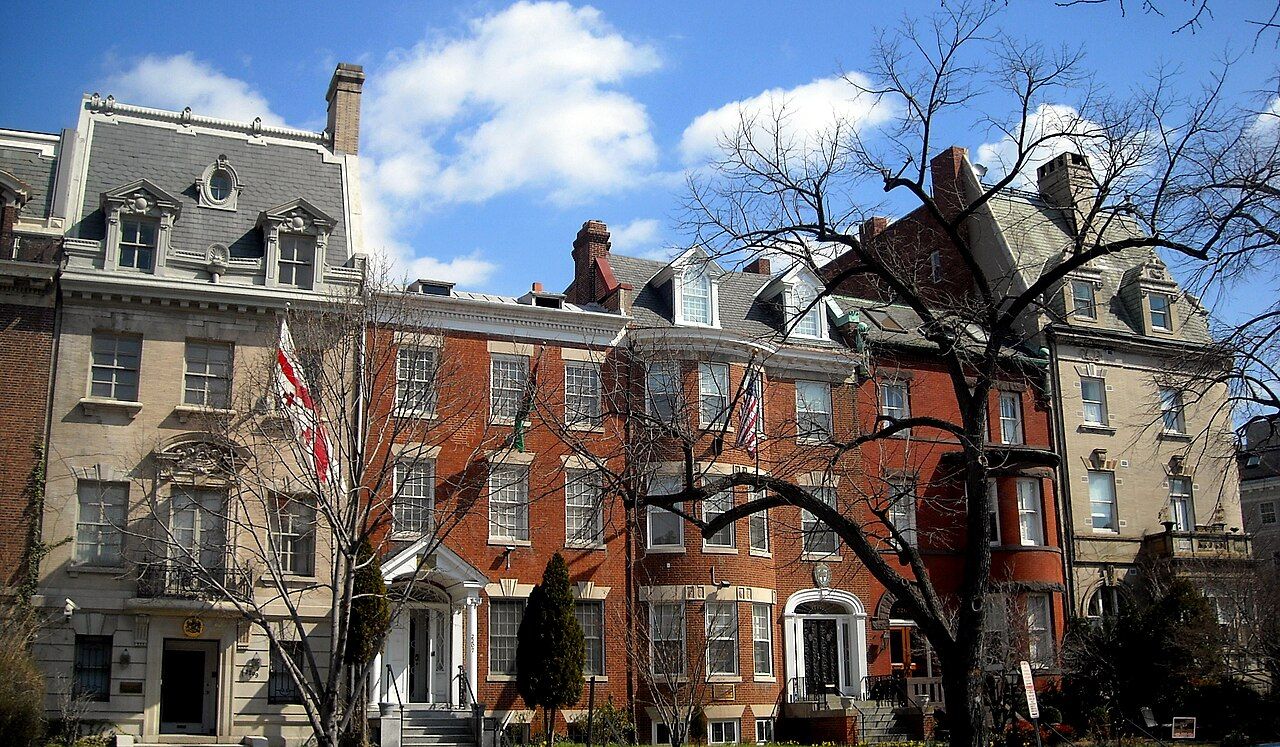
Walk west out of Adams Morgan, cross Connecticut Avenue, and the feel of the city changes within a block. The painted rowhouses and upper-floor shopfronts are gone. In their place are tall brick and limestone houses set back behind iron railings, flagpoles over the doors, and the hush of streets where most of the traffic is a diplomatic car or a dog walker. This is Kalorama, and its south-western part, Sheridan-Kalorama, holds a large share of the embassies and ambassadors' residences in Washington.
It is a neighbourhood for looking, not for doing. There is little to buy and few places to sit, but a couple of hours on foot shows you some of the grandest domestic architecture in the city, a presidential home turned museum, and a stretch of Massachusetts Avenue where the flags change every few doors.
From the hilltop to the big houses
The name comes from an estate that once covered these slopes; it is usually explained as a Greek-flavoured coinage for a fine view. In the early twentieth century the land was carved into large lots, and wealthy families, senators and cabinet members built town houses here. Many of those families moved on in the middle of the century, and foreign governments bought the houses one by one, which is why so many embassies today sit in what were built as private homes.
From the neighbourhood, the simplest way in is to head toward Connecticut Avenue, cross at the lights, and drift south-west along Kalorama Road or Wyoming Avenue. The ground falls toward Rock Creek on your right, and the side streets are steep. The Taft Bridge and its lions are just to the north if you want to start with a view down the valley.
Notice how the houses are dressed. You will see Georgian Revival fronts with fanlights over the doors, French-style mansard roofs, a few Tudor gables, and the occasional wide Mediterranean villa with tiled eaves. Plaques by the doors often give the name of the country that owns the building, and a flag on a staff above the entrance tells you the same thing from a distance.
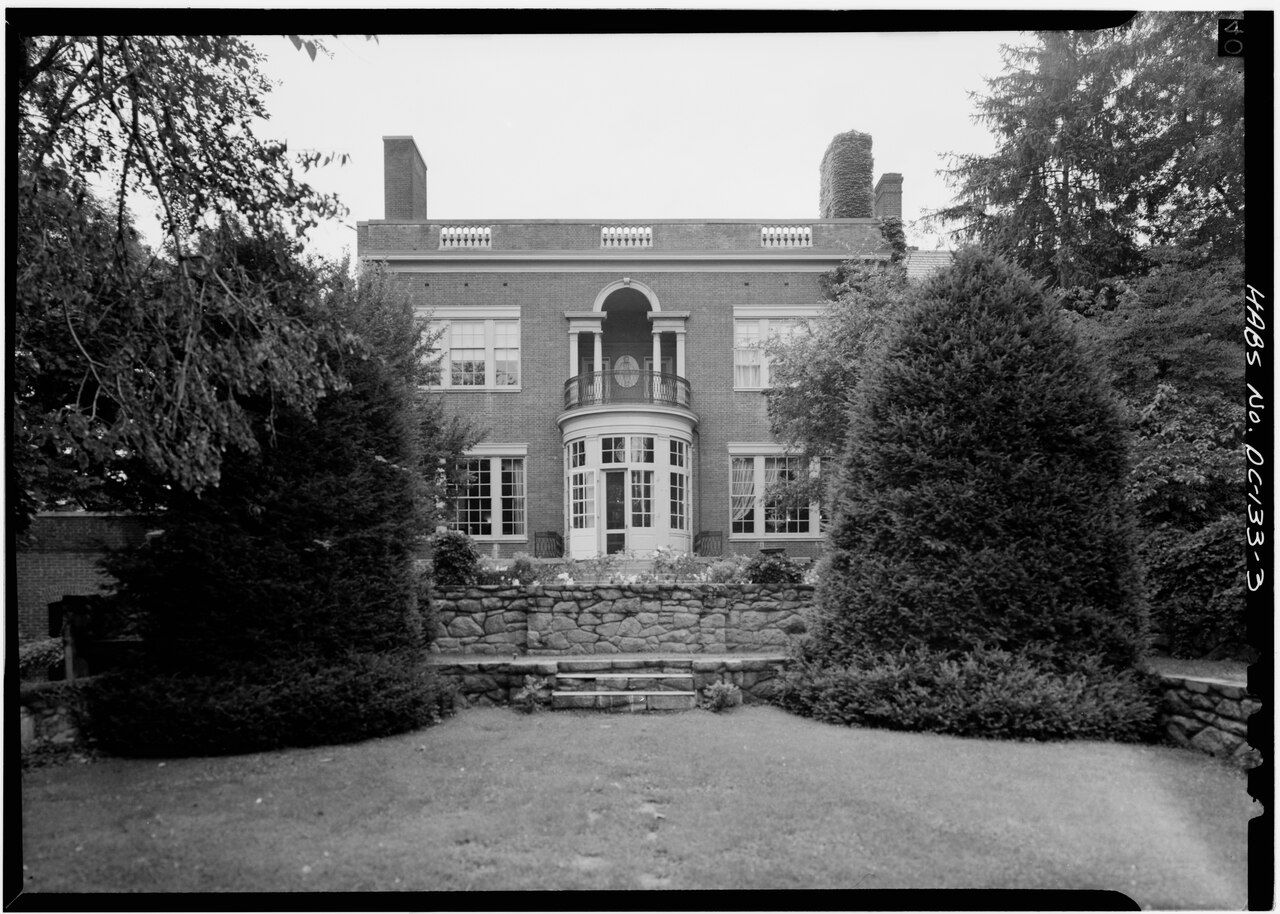
The Woodrow Wilson House
On S Street stands the red-brick Georgian Revival house where Woodrow Wilson lived after he left the presidency in 1921, and where he died in 1924. His widow, Edith, stayed on for decades and left the house and much of its contents to be kept as a memorial. It is now a museum run as a historic site.
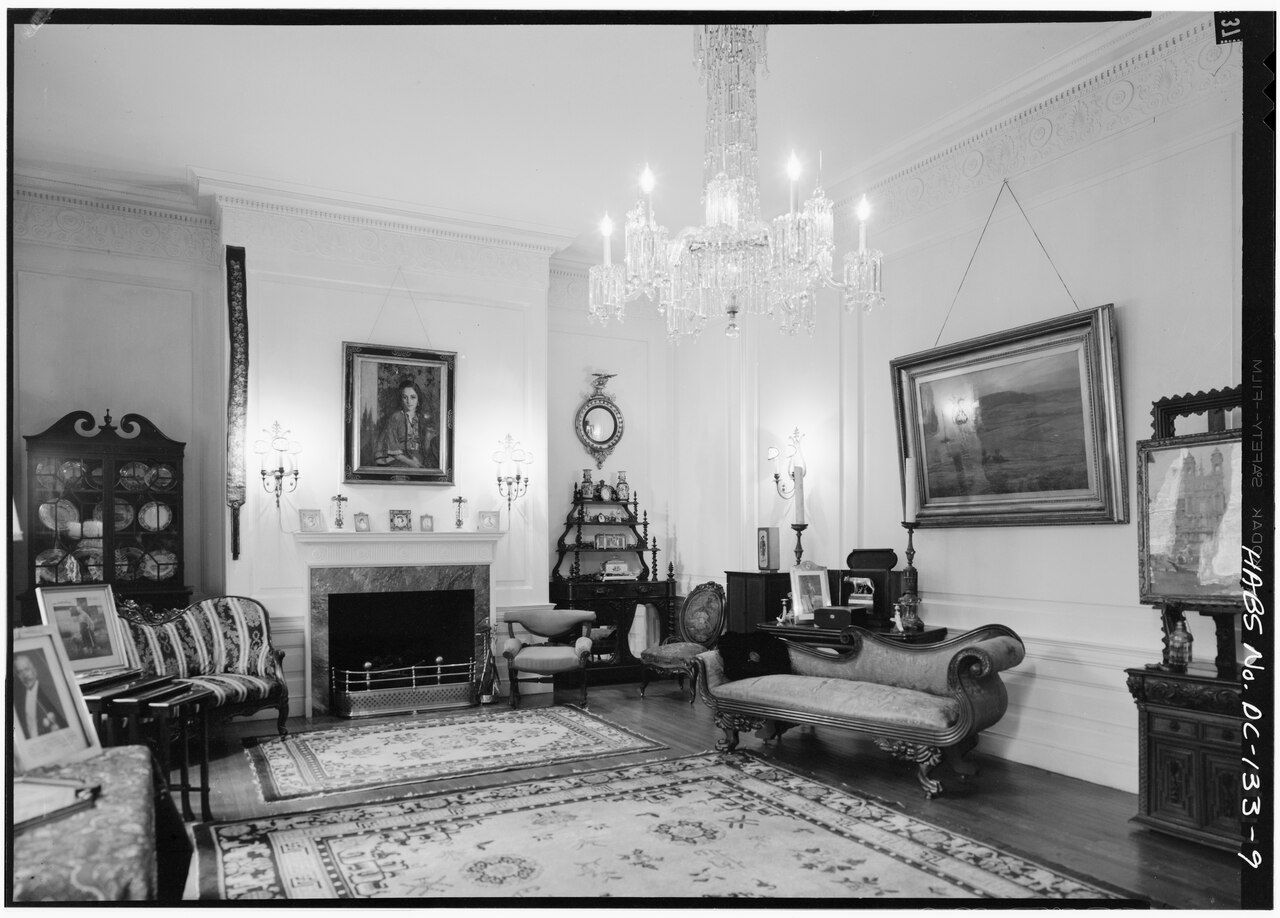
Inside, the rooms are kept much as the Wilsons left them: the library, the drawing room, the bedroom where the former president spent his last illness, and a collection of gifts from heads of state. Visits run at set times and there is an admission charge.
The Spanish Steps
A few minutes' walk from the Wilson House, where 22nd Street meets Decatur Place, the street gives up and becomes a stairway. The Spanish Steps, as everyone calls them, are a short flight of stone stairs split around a small wall fountain, with balustrades, planters and lamps. They were built to link two levels of the neighbourhood that were too steep for a road.
They are modest beside their Roman namesake, but they are one of the most pleasing small spaces in the city: shaded, framed by big houses, and almost always quiet. Sit for a minute near the top and listen to the water. The houses around you are homes, so keep voices down.
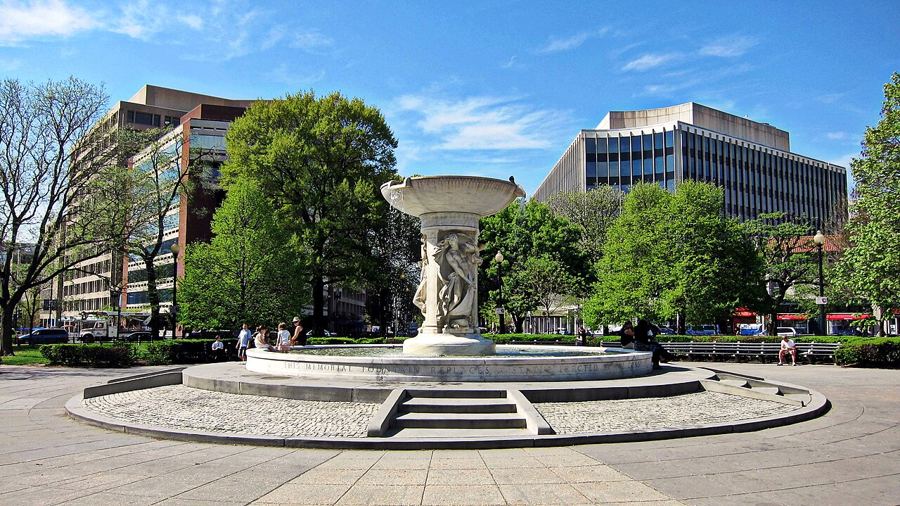 Next door: Next doorDown the hill to Dupont Circle
Sheridan Circle and Massachusetts Avenue
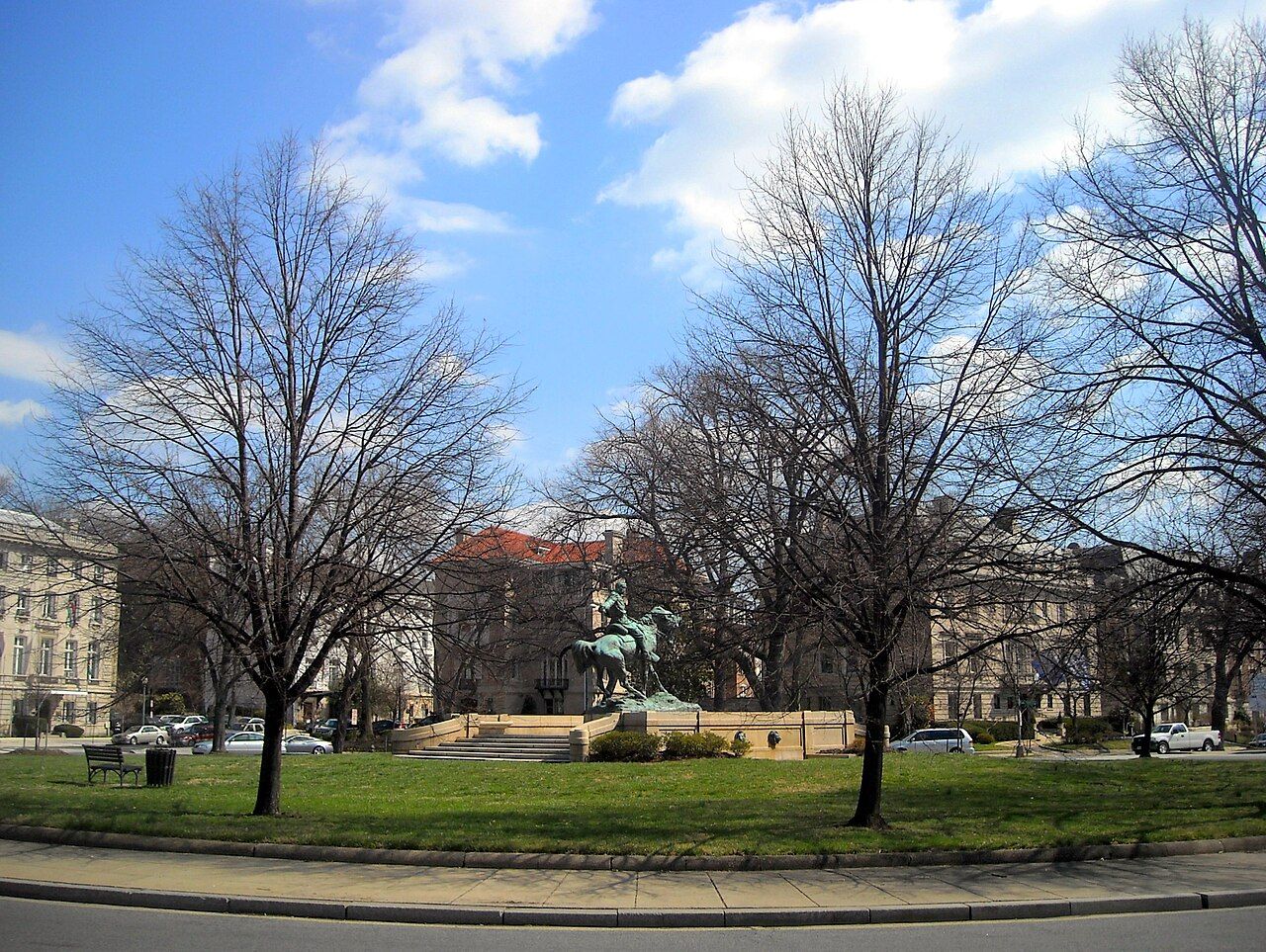
Walk down to Massachusetts Avenue and you reach Sheridan Circle, a green roundabout with a bronze equestrian statue of the Civil War general Philip Sheridan at its centre, by Gutzon Borglum, the sculptor later known for Mount Rushmore. Embassies ring the circle. Nearby, a small marker recalls the 1976 car bombing that killed the Chilean exile Orlando Letelier and his colleague Ronni Moffitt, a reminder that the city's diplomatic life has had its violent episodes.
This stretch of Massachusetts Avenue, running north-west from Dupont Circle toward the Naval Observatory, is the street most people mean by Embassy Row. Walking uphill from the circle, you pass a long sequence of chanceries and residences, each with its own flag and its own idea of how a country should present itself. A few things are easy to spot from the sidewalk:
- Statues outside embassies. Several countries have placed statues of national figures on their frontage. The best known shows Mahatma Gandhi in mid-stride near the Dupont end; further up, Winston Churchill stands outside the British Embassy, placed so that one foot is on embassy grounds and the other on American soil.
- The Islamic Center. A white mosque with a slender minaret faces the avenue near Rock Creek. It is an active place of worship; visitors are generally welcome outside prayer times if they dress modestly.
- The bridge over the creek. Massachusetts Avenue crosses Rock Creek on a bridge of its own, with a long view down into the trees.
- A garden for a poet. Further up, across the avenue from the British Embassy, a small memorial garden honours the Lebanese-American writer Kahlil Gibran.
The walk from Sheridan Circle to the Naval Observatory, where the vice-president lives, is a steady climb of a little over a mile. Many people go only as far as the creek and come back down, which shows you most of what is worth seeing.
Walking past embassies politely
Most embassies are working offices with security staff, cameras and sometimes police posts outside. The sidewalks are public and you are free to walk along them, look at the buildings and photograph the architecture. A few habits make the visit easy for everyone:
- Photograph façades, flags and statues, not guards, police posts, gates or the cameras themselves.
- Do not linger at an entrance or lean on railings and gates.
- Keep to the sidewalk; driveways and front steps are private property, even when the gates stand open.
- If a guard or police officer asks you to move on, do so without argument.
- Expect occasional closures and motorcades. Roads near an official visit can be blocked at short notice.
Some embassies open to the public on set days,
It is a neighbourhood for looking, not for doing.
Planning the loop
A comfortable route from 18th Street: across Connecticut Avenue; along Kalorama Road and Wyoming Avenue; down to S Street for the Wilson House; round the corner to the Spanish Steps; south to Sheridan Circle; up Massachusetts Avenue as far as the creek; and back along one of the quieter cross streets. Allow two to three hours with a museum visit, about ninety minutes without.
The streets are steep in places and there are almost no places to eat or public toilets inside the neighbourhood itself. Plan your stops at either end: Adams Morgan on the way out, or the busy streets around Dupont Circle at the bottom of Massachusetts Avenue, where the Metro gives you an easy way home. The leafy streets are at their best in April and May, when the dogwoods and azaleas are out, and again in October.
If the big-house architecture catches your interest, compare it with the more modest bay-fronted terraces on your own side of Connecticut Avenue, which are explained in our guide to reading a Washington rowhouse.
More from this block: Next-door neighbourhoods.