
Cross 16th Street heading east from Adams Morgan and the land rises gently to a broad ridge. This is Columbia Heights, one of the densest neighbourhoods in the city, and the place where many residents of the surrounding streets go to buy groceries, catch the Green Line and run errands. It is less a sight than a slice of daily life, but a few landmarks give it shape, above all a restored 1920s theatre at its busiest crossroads.
The crossroads at 14th and Park Road
The centre of the neighbourhood is the junction of 14th Street, Park Road and Irving Street. Here the Metro station opens onto a paved civic plaza with a fountain of ground-level jets that children run through in summer. Large modern buildings with chain stores and apartments surround it, and on weekends the plaza fills with families, street preachers, musicians and people waiting for buses.
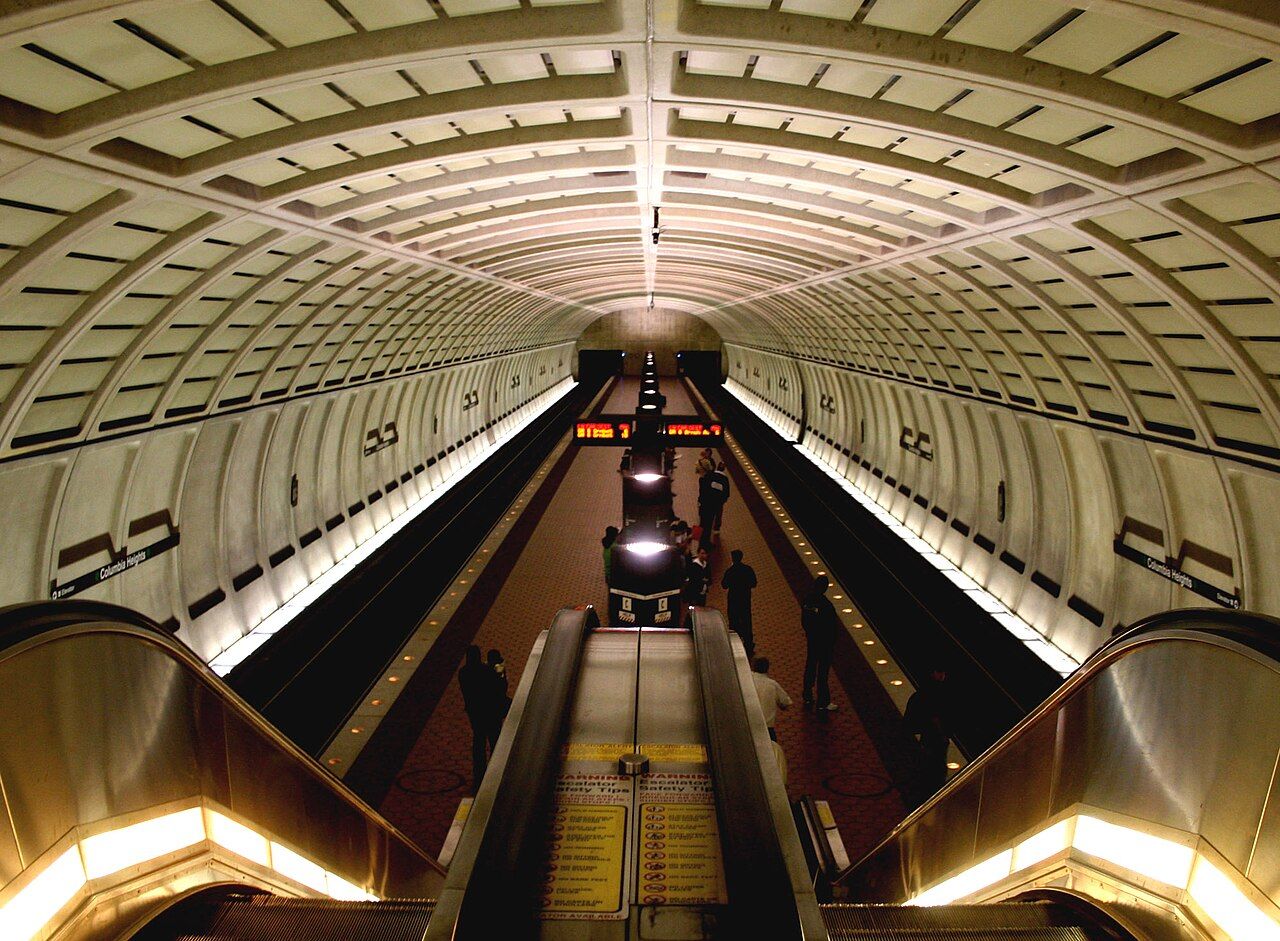
It is worth understanding how recent this is. The Columbia Heights station opened in 1999, and before that the neighbourhood had spent three decades recovering from the damage of 1968, when the unrest after Martin Luther King Jr.'s assassination tore through 14th Street. Empty lots and boarded buildings lined the street for years. The station brought investment, and in the 2000s the big developments rose around it, with all the gains and frictions that change brings.
The Tivoli Theatre
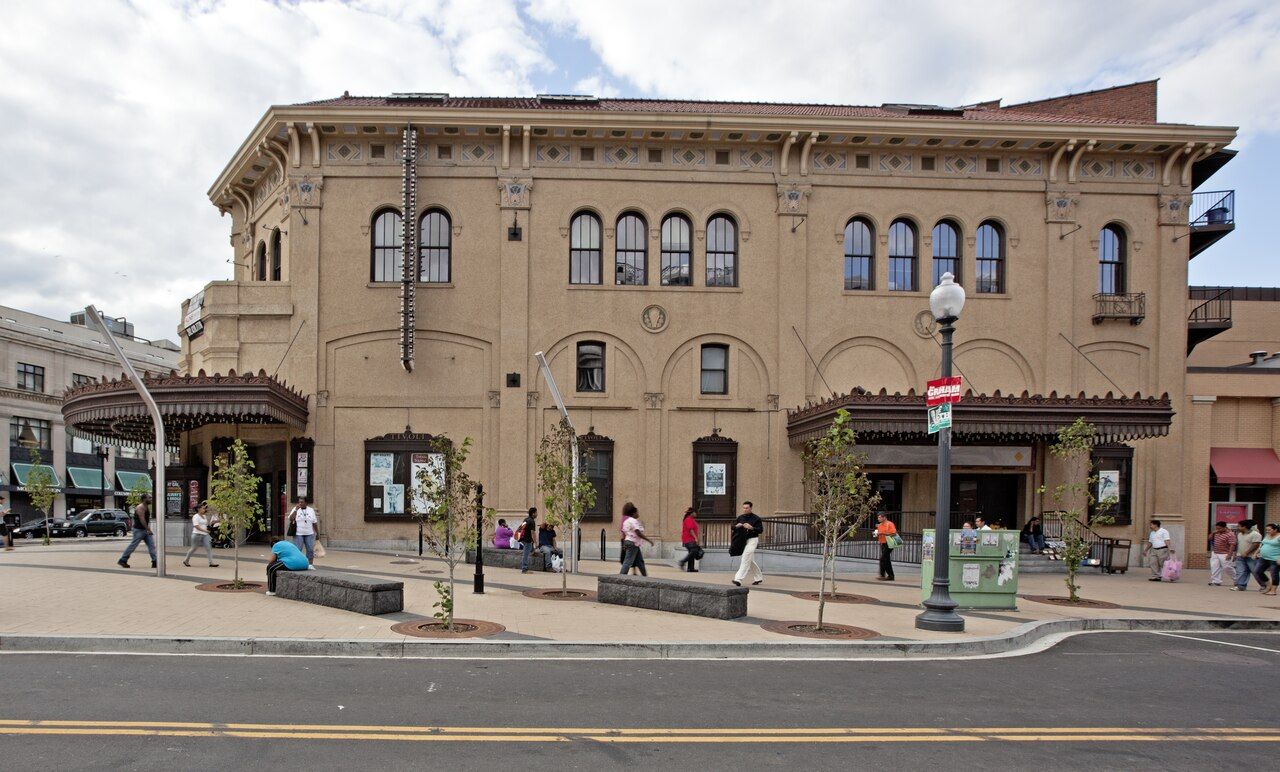
On the corner of 14th Street and Park Road stands the Tivoli, opened in 1924 as a grand movie palace. Its cream-coloured front, with arched windows, a corner tower and Italian Renaissance details, was designed by Thomas W. Lamb, one of the best-known theatre architects of his day. For decades it was a neighbourhood landmark; it closed in the 1970s and stood empty and decaying for a long time.
Restoration came in the 2000s. The façade was repaired, the building returned to use, and a Spanish-language theatre company now performs inside, staging plays, music and dance in a smaller hall within the old shell. Check its programme if you want to see a show. Even from the sidewalk, the corner is the best piece of architecture on the street.
Stand across Park Road to take it in. The tower marks the corner like a campanile, the long arcade of windows runs down 14th Street, and the decorative panels and cornice show the money that went into neighbourhood picture palaces in the years before sound films arrived. Its survival, when so many similar theatres in the city were demolished, is a large part of why people here are proud of it.
 Next door: StayingGetting around without a car
Rowhouse streets and many languages
Step a block off 14th Street and the scale drops at once. Long rows of brick houses with porches and bay fronts run east and west, many built in the 1900s and 1910s for clerks and government workers riding the streetcars downtown. Some have been split into flats; others are still single family homes with gardens behind iron fences.
Columbia Heights has long been one of the most mixed neighbourhoods in Washington. Black families who have lived here for generations share the streets with Salvadoran, Dominican, Vietnamese, Ethiopian and many other communities, plus newer arrivals of every kind. You hear Spanish, Amharic and English on the same corner, and the food reflects it, from pupusa griddles to Vietnamese noodle soup.
- Look for the older corner buildings with shopfronts on the ground floor and flats above.
- Walk east past 11th Street and the streets grow quieter again as they run toward Georgia Avenue and the campus of Howard University.
- Churches here often hold services in several languages; notice boards list them.
- Weekend mornings bring a small farmers' market to the plaza in season.
The east side of Meridian Hill Park
Between 15th and 16th Streets, on the slope that separates the two neighbourhoods, lies Meridian Hill Park, with its terraced gardens, long lawn and cascade. Adams Morgan visitors usually enter from 16th Street on the west. The east side, along 15th Street, is the Columbia Heights face of the park: rowhouses look straight across at its walls, and neighbours use its gates for shortcuts, dog walks and evening runs.
On a fine day the park is the best walking link between the two. Cross 16th Street from Adams Morgan, wander through the upper lawn, leave by a gate on the 15th Street side, and head north-east through the rowhouse streets to 14th Street and the plaza. Or follow Columbia Road east across 16th Street to 14th Street and turn north. Either takes around fifteen to twenty minutes.
Platforms, buses and the plaza
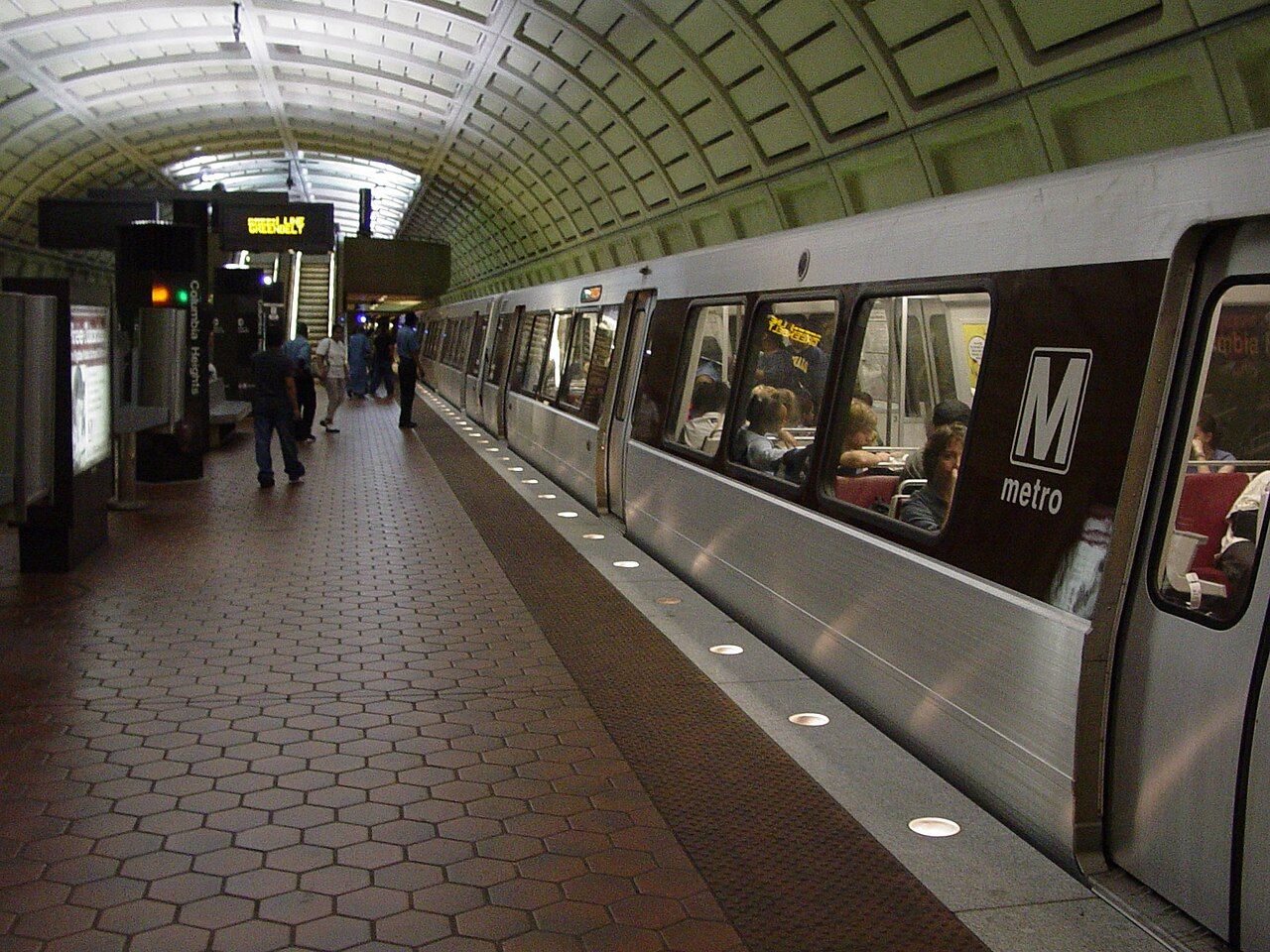
- The Columbia Heights station is on the Green Line. Check service changes before a late or weekend trip.
- Buses run along 14th Street and 16th Street toward downtown; routes have been redrawn in recent years.
- The plaza is busy and generally fine by day. At night stay aware, as you would around any big transit hub.
- Public toilets are scarce, so plan your stops.
Why come
Columbia Heights will not detain you for a full day, but an hour or two shows you how most Washingtonians live, and it pairs naturally with a morning in the park or a walk north to the quieter streets of Mount Pleasant. If you are staying in Adams Morgan, it is also the quickest way onto the Green Line toward U Street, the National Archives and the southern half of the city.
More from this block: Next-door neighbourhoods, or back to the six doors.